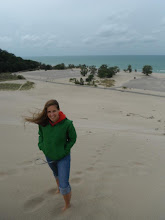
I arrived back in New Orleans yesterday. Even though I'm still trying to figure out which of the four time zones I've visited in the past week I left my brain in, I was back to work today. I met my supervisor at her house to take a ride down to Pointe-aux-Chenes for an evening meeting with a representative from the Intertribal Agricultural Council and the Mobile Farmers Market.
While she was getting ready to go, she asked about my time home and my travels. Somehow we got to talking about how I would go about answering relatives when they ask what I am doing in South Louisiana.
FUMBLE! (Sorry, watching the Saints game. I am back in South Louisiana.) (But also, that describes how I generally feel when trying to explain to people what my job is.)
Really, it's difficult to describe my work. The day to day is always different. Giving presentations, coordinating conservation efforts, planning and taking part in planting projects, connecting different organizations... some days I'm working from home in my pajamas, some days I'm dressed up and sitting in meetings (and some days I'm dressed down, I love working in natural resources conservation), some days I'm covered in mud. I'll let you guess which days are my favorites.
This meeting tonight was really good. There were about twenty people from the Pointe-aux-Chenes (Point-au-Chenes? Pointe-aux-Chien? I've seen it several different ways. Who knows.) to talk about first people's agricultural products. The Mobile Farmers Market gathers products from around the country-- there was blue corn flour and dried cholla blossoms from the southwest, cranberry syrup and organic corn from Minnesota and Wisconsin, silver and beaded jewlery, wild rice (real wild rice, which is very different from what they call wild rice in the grocery stores), salmon from the Pacific Northwest.
The goals of the program are not just reconnecting tribal trade routes and selling goods, but telling stories. The program has revived food traditions for many tribes, regardless of their federal or state recognition or lack thereof. The IAC works to help tribes gain better access to USDA programs, and seeks market outlets for their goods. Some very cool work going on.
I enjoyed sharing a meal and talking with more members of the community, especially since I've been partnering with the First People's Conservation Council. Tonight I met a man who invited me to work as a deck hand on his shrimping trawler this May. YES PLEASE! I have been able to have the most unique experiences here in South Louisiana. Even as a vegetarian, that sounds awesome. First day back, and I'd say I'm off to a good start!
Showing posts with label food. Show all posts
Showing posts with label food. Show all posts
04 January 2014

17 November 2013
faith and hope and satsumas
Today's sermon at Bayou Blue was basically, "Have hope, but get up off your you know what and do something."
I'm pretty good at getting off my butt most of the time. I've planted dozens of trees and hundreds of plugs of cord grass, sat in on countless meetings for countless organizations (which ok, involved sitting on my butt, but I had to get up to get there), hiked all over southern Louisiana to learn about this place, and in my spare time, do absurd things like the Color Run (even though my housemates and I walked the whole thing).
Last week was definitely a big exception. Aside from the literal difficulties of getting off my ass these days, there was also the great frustration of e v e r y s i n g l e p l a n I'd made for work for the week falling through. All of them. Every day. On Thursday I went to Houma and Thibodaux to visit museums. On Friday I visited the branch of Jean Lafitte National Park in the French Quarter. I read a lot. I still fell short on hours (thank goodness I'd built up a good supply of surplus over the past few months, because I basically shot it all last week).
And what about life in general? There's the more figurative get off my butt and do something... like get a job. It's not that I haven't tried-- I've applied to literally over 175 positions in my field since graduating from college more than five years ago, most of which had multiple openings/locations. That doesn't include the countless jobs I applied to that don't involve my beloved geography degrees. That's so much rejection. The worst of it came a few weeks ago when I didn't get my ideal job at home in NJ. Even 300 volunteer hours, a personal recommendation, and a home field advantage can't help me.
Frustrating. But: have hope. Thankfully, I am doing something I enjoy right now, at least, when my plans don't all evaporate and I actually have things to do. And ultimately, this long string of not getting any jobs I've applied for except Target during the holiday season (ugh) lead me to said something I enjoy. Also thankfully: I never received the official rejection note, rather, a very kind and encouraging email from the wonderful soils mentor who let me dig all of those holes in the past year and got me correcting all of you when you call it "dirt". And, I suppose, I should be thankful that I didn't have to face any difficult decisions or hard goodbyes prematurely.
After church this morning, this sweet Cajun man was talking about shooting a possum that was destroying his satsuma tree (for those of you outside of southern Louisiana, satsumas are these wonderful clementine-like oranges, slightly more tart perhaps). I mentioned that my housemates and I love satsumas. So he drove home right then, and returned ten minutes later with a big bag FULL of them, fresh and ripe and sweet and wonderful. I may or may not have had about a half dozen of them today, and there are still several dozen left.
It's the little things that keep me motivated and remind me to remain hopeful. I'm still getting good experience in my field here, and I'm getting delicious citrus on top of it (you know, and the general support of a great community). I have no idea what's next for Mike and me, where we will be or what we will be doing, but I'm in a pretty safe position in the meantime. So I'll keep hoping, and I'll keep getting off my butt as best and as much as I can.
I'm pretty good at getting off my butt most of the time. I've planted dozens of trees and hundreds of plugs of cord grass, sat in on countless meetings for countless organizations (which ok, involved sitting on my butt, but I had to get up to get there), hiked all over southern Louisiana to learn about this place, and in my spare time, do absurd things like the Color Run (even though my housemates and I walked the whole thing).
Last week was definitely a big exception. Aside from the literal difficulties of getting off my ass these days, there was also the great frustration of e v e r y s i n g l e p l a n I'd made for work for the week falling through. All of them. Every day. On Thursday I went to Houma and Thibodaux to visit museums. On Friday I visited the branch of Jean Lafitte National Park in the French Quarter. I read a lot. I still fell short on hours (thank goodness I'd built up a good supply of surplus over the past few months, because I basically shot it all last week).
And what about life in general? There's the more figurative get off my butt and do something... like get a job. It's not that I haven't tried-- I've applied to literally over 175 positions in my field since graduating from college more than five years ago, most of which had multiple openings/locations. That doesn't include the countless jobs I applied to that don't involve my beloved geography degrees. That's so much rejection. The worst of it came a few weeks ago when I didn't get my ideal job at home in NJ. Even 300 volunteer hours, a personal recommendation, and a home field advantage can't help me.
Frustrating. But: have hope. Thankfully, I am doing something I enjoy right now, at least, when my plans don't all evaporate and I actually have things to do. And ultimately, this long string of not getting any jobs I've applied for except Target during the holiday season (ugh) lead me to said something I enjoy. Also thankfully: I never received the official rejection note, rather, a very kind and encouraging email from the wonderful soils mentor who let me dig all of those holes in the past year and got me correcting all of you when you call it "dirt". And, I suppose, I should be thankful that I didn't have to face any difficult decisions or hard goodbyes prematurely.
After church this morning, this sweet Cajun man was talking about shooting a possum that was destroying his satsuma tree (for those of you outside of southern Louisiana, satsumas are these wonderful clementine-like oranges, slightly more tart perhaps). I mentioned that my housemates and I love satsumas. So he drove home right then, and returned ten minutes later with a big bag FULL of them, fresh and ripe and sweet and wonderful. I may or may not have had about a half dozen of them today, and there are still several dozen left.
It's the little things that keep me motivated and remind me to remain hopeful. I'm still getting good experience in my field here, and I'm getting delicious citrus on top of it (you know, and the general support of a great community). I have no idea what's next for Mike and me, where we will be or what we will be doing, but I'm in a pretty safe position in the meantime. So I'll keep hoping, and I'll keep getting off my butt as best and as much as I can.
09 November 2013
House.
My mom left this morning after a wonderful, whirlwind three day visit. We wandered around the French Quarter, took a trip out to New Orleans East to see Bayou Sauvage, tried on wedding dresses, ate lots of southern Louisiana food (including vegetarian jambalaya (!!!) for me and a lot of different seafood for her), and volunteered at Program of Hope.
We also thoroughly enjoyed the music and legacy of Professor Longhair. (!!!!!) I discovered his music in college-- better late than never. A friend put "Big Chief" on a mix for my birthday one year, and I have walked this earth nearly every day since with that piano riff stuck in my head.
Mom discovered his music on Thursday night when I took her to Fess Fest at Tipitina's, featuring Hugh Laurie and Joe Jackson and many other very, very talented individuals (including a group of high school students with some serious chops). Better later than neverer!

"There are at least 100 people in this room and 10,000 in this city who can do this better than me. Well, *!@# 'em. I got here first." -Hugh Laurie
Seriously, amazing concert. Every musician, every song was just awesome. It's a little disorienting at first to hear Hugh Laurie speak with his native English accent rather than his very well faked-for-TV New Jersey one, but he is a fantastic host and a talented musician. It was very clear to the room that for him, playing Fess's music at Tipitina's was a boyhood dream realized. I love seeing musicians who are just elated to be playing.
Something else cool about the concert: proceeds went to the Tipitina's Foundation, which supports the preservation of Louisiana's incredible music culture. They run a lot of education programs for youth, but they're also partnered with Project Homecoming, where three of my housemates work, to restore the house that Fess lived in, where his daughter and grandson were living until Katrina wrecked it. By this spring, they'll be back in the house, with some renovated space to live in, some renovated space to rent out and some renovated space to serve as a Fess museum. I'm really excited about that this will all be completed while I'm still in New Orleans to see it.
In the meantime, Mom and I decided to go see it as it is now, especially because my housemate Anna Leigh is one of the people working on the house, and could stop and give us a tour. It's coming along great, and they were able to save and refurbish some of the original pieces, including a few windows and the brickwork of the fireplaces. Touring everyone else's job placements the first day I was in New Orleans, I saw a big mantle and his front door sitting in storage over at the Project Homecoming headquarters, waiting to be fixed up and put back where they belong. Kind of cool.


It's exciting to see things being rebuilt. It's also really exciting to take part in it in some small way (so selfless, buying that ticket to hear Hugh Laurie play Professor Longhair's song. What a sacrifice.). (I'm hoping to go in with Anna Leigh sometime soon and lend a hand on one of my days off, too.) It's very cool to see the full circle of things.
This isn't from Tipitina's this week, but it'll do:
We also thoroughly enjoyed the music and legacy of Professor Longhair. (!!!!!) I discovered his music in college-- better late than never. A friend put "Big Chief" on a mix for my birthday one year, and I have walked this earth nearly every day since with that piano riff stuck in my head.
Mom discovered his music on Thursday night when I took her to Fess Fest at Tipitina's, featuring Hugh Laurie and Joe Jackson and many other very, very talented individuals (including a group of high school students with some serious chops). Better later than neverer!
"There are at least 100 people in this room and 10,000 in this city who can do this better than me. Well, *!@# 'em. I got here first." -Hugh Laurie
Seriously, amazing concert. Every musician, every song was just awesome. It's a little disorienting at first to hear Hugh Laurie speak with his native English accent rather than his very well faked-for-TV New Jersey one, but he is a fantastic host and a talented musician. It was very clear to the room that for him, playing Fess's music at Tipitina's was a boyhood dream realized. I love seeing musicians who are just elated to be playing.
Something else cool about the concert: proceeds went to the Tipitina's Foundation, which supports the preservation of Louisiana's incredible music culture. They run a lot of education programs for youth, but they're also partnered with Project Homecoming, where three of my housemates work, to restore the house that Fess lived in, where his daughter and grandson were living until Katrina wrecked it. By this spring, they'll be back in the house, with some renovated space to live in, some renovated space to rent out and some renovated space to serve as a Fess museum. I'm really excited about that this will all be completed while I'm still in New Orleans to see it.
In the meantime, Mom and I decided to go see it as it is now, especially because my housemate Anna Leigh is one of the people working on the house, and could stop and give us a tour. It's coming along great, and they were able to save and refurbish some of the original pieces, including a few windows and the brickwork of the fireplaces. Touring everyone else's job placements the first day I was in New Orleans, I saw a big mantle and his front door sitting in storage over at the Project Homecoming headquarters, waiting to be fixed up and put back where they belong. Kind of cool.
It's exciting to see things being rebuilt. It's also really exciting to take part in it in some small way (so selfless, buying that ticket to hear Hugh Laurie play Professor Longhair's song. What a sacrifice.). (I'm hoping to go in with Anna Leigh sometime soon and lend a hand on one of my days off, too.) It's very cool to see the full circle of things.
This isn't from Tipitina's this week, but it'll do:
14 June 2011
visiting the farm
Today Lorelei and I had a big adventure just four miles from home (camp). She invited me to go pick up her CSA (community supported agriculture) share at Genesis Farms, so we went during my lunch break to collect greens, potatoes, herbs and other early spring vegetables. It smelled amazing in the little shop where all of the picked produce was waiting for us, and I just loved talking about farming and food with Lorelei. It's such a spiritual thing for us.
As part of her week's share, we got to pick a pint of strawberries too. It had started to rain lightly by then, but we decided to go through with it anyway. Of course, the skies opened once we were out in this field, looking for ripe ones. I love the smell of rain falling on fields, and it wasn't a violent storm, just a wet one. We had an awesome view of the mountains and other agricultural plots. It was just a very beautiful moment, sealed in the very sweet wonderful taste of freshly picked, organic New Jersey strawberries.
As part of her week's share, we got to pick a pint of strawberries too. It had started to rain lightly by then, but we decided to go through with it anyway. Of course, the skies opened once we were out in this field, looking for ripe ones. I love the smell of rain falling on fields, and it wasn't a violent storm, just a wet one. We had an awesome view of the mountains and other agricultural plots. It was just a very beautiful moment, sealed in the very sweet wonderful taste of freshly picked, organic New Jersey strawberries.
25 May 2011
Mercer County
Today, for camp, I ran a little experiment in marketing. I read in a marketing blog somewhere a suggestion to have a camp information table in farm markets, under the idea that the same people who find the physical and community wellness of a farm market attractive, would find the spiritual wellness and community of a camp to be likewise. I emailed all of the farm markets in NJ last month, and Trenton was the first one to write back.
My drive to Trenton was not uninteresting. Last night, I mentioned to a few friends here at camp that I planned to take the now infamous Route 206 straight there. They made attempts to talk me out of it, suggesting that Route 31 was the better way. Route 31 has been exhausting me lately-- I don't know why it feels way longer than it is. It's all sorts of windy with intermittent traffic lights, just like 206. But I decided I'd give it a try, and took one route one way and one the other. Both were during rush hour. Result: I stand by my initial decision to take 206, and would again in the future.
As for the success of sitting in the farm market... not so much. At least, not as much as I'd hoped. I spoke with a few families, but it seems that between it leading up to a holiday weekend and the fact that this market is open year round, seven days a week, it just wasn't a particularly busy day. I enjoyed sitting amongst farm stands with fresh, ripe strawberries and beautiful flowers. I spoke with some older folks who had neat memories of the area. The farm market we were standing in used to be a brick yard. The roads used to be fewer and further between. Of course. But I always enjoy hearing stories.

The other delightful part was when my friends Kate and Pam showed up to say hello. I'd had my boss post on camp's facebook page that I was in the market and people should come by. They were bored in Princeton so they did! I kind of love love love the extended community of Johnsonburg-- there are really just wonderful people from that family all over the place. It was really nice to see them both, and after I was done at the market, we drove up 206 for a few minutes to stop at this lovely cafe in Lawrenceville, the Fedora Cafe. Oh my gosh go there sometime!

from http://fedoracafe.webs.com/cafepics.htm
I actually had a chai milkshake, which was pretty excellent, but I had a bite of Pam's amazing raspberry brownie, too. The place was really cozy, not in that it was super small, but in that there were these sweet couch/bench seats in a window that we sat in, with cushions everywhere. Apparently the place doesn't have wifi, so Kate said that it's her favorite place to go read/study when she needs to free herself from distraction but not feel like she's just sitting alone at home. The decorations were fun and the staff was good. Go there. Awesome. And I'm just so happy that I got to see those sweet ladies today and make such a nice pit stop before driving back to camp. Mercer County played a great host today.
My drive to Trenton was not uninteresting. Last night, I mentioned to a few friends here at camp that I planned to take the now infamous Route 206 straight there. They made attempts to talk me out of it, suggesting that Route 31 was the better way. Route 31 has been exhausting me lately-- I don't know why it feels way longer than it is. It's all sorts of windy with intermittent traffic lights, just like 206. But I decided I'd give it a try, and took one route one way and one the other. Both were during rush hour. Result: I stand by my initial decision to take 206, and would again in the future.
As for the success of sitting in the farm market... not so much. At least, not as much as I'd hoped. I spoke with a few families, but it seems that between it leading up to a holiday weekend and the fact that this market is open year round, seven days a week, it just wasn't a particularly busy day. I enjoyed sitting amongst farm stands with fresh, ripe strawberries and beautiful flowers. I spoke with some older folks who had neat memories of the area. The farm market we were standing in used to be a brick yard. The roads used to be fewer and further between. Of course. But I always enjoy hearing stories.
The other delightful part was when my friends Kate and Pam showed up to say hello. I'd had my boss post on camp's facebook page that I was in the market and people should come by. They were bored in Princeton so they did! I kind of love love love the extended community of Johnsonburg-- there are really just wonderful people from that family all over the place. It was really nice to see them both, and after I was done at the market, we drove up 206 for a few minutes to stop at this lovely cafe in Lawrenceville, the Fedora Cafe. Oh my gosh go there sometime!
from http://fedoracafe.webs.com/cafepics.htm
I actually had a chai milkshake, which was pretty excellent, but I had a bite of Pam's amazing raspberry brownie, too. The place was really cozy, not in that it was super small, but in that there were these sweet couch/bench seats in a window that we sat in, with cushions everywhere. Apparently the place doesn't have wifi, so Kate said that it's her favorite place to go read/study when she needs to free herself from distraction but not feel like she's just sitting alone at home. The decorations were fun and the staff was good. Go there. Awesome. And I'm just so happy that I got to see those sweet ladies today and make such a nice pit stop before driving back to camp. Mercer County played a great host today.
28 September 2010
Tuesday 31 August and Wednesday 1 September
Our last full day was spent around Blantyre, shopping, packing, relaxing a bit. I bought some hymnals to share with my choir back home and some other small things. We had lunch at an Italian restaurant, which seemed a little odd to me, but was good. Usually when I travel, there's some food that I'm excited about having when I get home. (When I was in Mexico, it wasn't food so much as having a glass of cold milk!) We had so many different things in Malawi, familiar or not, that I wasn't determined to have anything in particular upon my arrival.
I packed like a champion. Because my duffel bag was so full of donations on the way over, it was very light and mostly empty for the return trip. I even put my second carry on in there to check it all as one bag, just taking my backpack with me for the flights.
We cooked dinner together. After the meal, we cleared the table and played a really lively game of spoons.


I didn't lose!
The night was peaceful and quiet. The team spent some time together before we went to bed, reflecting on the adventures of the past two weeks. I think this has confirmed what I've long believed-- my life is definitely leading me to serve others. I don't know if that will be with the church, or the government, I don't know if that will be close to home or really far away. I just know.
The last day arrived without any rush. I woke up pretty early on my own and took my time dressing and wandering over to the Machinjili's main house, where I helped Liz slowly set the table for breakfast. This is the first thing you heard about when I returned. It was a peaceful morning filled with oatmeal, bananas, papaya and tea. It was bittersweet goodbyes with Bonongwe and Mwalabu at the BSHDC. It was the shortest car ride of the entire trip to the airport. It was holding back tears as the Chinupule Women's group and the Machinjili family bid us safe travels.

Liz and Serah Machinjili, followed by the Chinupule Women's Prayer Group
It was amazing.
PS: We did not bring the chicken with us for our long journey home.
I packed like a champion. Because my duffel bag was so full of donations on the way over, it was very light and mostly empty for the return trip. I even put my second carry on in there to check it all as one bag, just taking my backpack with me for the flights.
We cooked dinner together. After the meal, we cleared the table and played a really lively game of spoons.
I didn't lose!
The night was peaceful and quiet. The team spent some time together before we went to bed, reflecting on the adventures of the past two weeks. I think this has confirmed what I've long believed-- my life is definitely leading me to serve others. I don't know if that will be with the church, or the government, I don't know if that will be close to home or really far away. I just know.
The last day arrived without any rush. I woke up pretty early on my own and took my time dressing and wandering over to the Machinjili's main house, where I helped Liz slowly set the table for breakfast. This is the first thing you heard about when I returned. It was a peaceful morning filled with oatmeal, bananas, papaya and tea. It was bittersweet goodbyes with Bonongwe and Mwalabu at the BSHDC. It was the shortest car ride of the entire trip to the airport. It was holding back tears as the Chinupule Women's group and the Machinjili family bid us safe travels.
Liz and Serah Machinjili, followed by the Chinupule Women's Prayer Group
It was amazing.
PS: We did not bring the chicken with us for our long journey home.
Monday 30 August part two: closing ceremony in villages, back to Blantyre
We arrived back from safari quite a bit later than originally planned (oh, Malawi time), but they held the goodbye ceremony for us. Racing sunlight, introductions were condensed to the group scale instead of the lengthy traditional individual style. The ceremony was great-- lots of singing and dancing, and someone was translating the entire time. My favorite was hearing a song I knew-- my church sings it as "Siyahamba ekukhanyene kwenkos'", but in English it's "We Are Marching in the Light of God". It was nice to have something so familiar.
We quickly presented the hundreds of pounds of donations that we had carried into the country-- the sun was already behind Zomba Plateau at this point and we were fast losing light. We were also presented with a few gifts:

a guinea fowl

the group was given a box of fruits and vegetables. I was given a tool that they use to sift flour, which I was awful at when I helped cooked in the village, but I was just absolutely in awe of this kind gift. Wherever I end up next in my life, you can bet this will be proudly displayed in my kitchen.

the sun setting behind Zomba Plateau
Night fell quickly and beautifully. We said our goodbyes. I sat in the back of Mwalabu's truck with a few other men and a pile of empty duffel bags. As we drove each of the men home (people who worked with VIP, helping with logistics and translating), the stars came out. It was a cool, beautiful night and I just stared at the sky, trying to soak in the incredibleness of it all.
That guinea fowl would become a ridiculous part of the evening. Somehow, once again, I was the only one keeping track of the bird in the slightest. As I rode in the back of the truck I knew it was on the floor in the truck. Then, we all heard a scream and Randa jumped out of the truck (while we were stopped at Mwalabu's house to drop off his children). She didn't know the fowl was at her feet, and then it moved! We ended up moving it up to the front seat with Bob, where it ended up riding for the rest of the trip that evening.
The team plus Mwalabu and Bonongwe went out to dinner after this. The place Liz had elected to go to turned out to be closed, so then we joked about getting pizza. One woman told King Bob to make it so!... and then we pulled into a place called Domino's! It was a little funny. The place did make pizzas but also served all sorts of other things. I had a vegetable curry.
At one point, Liz, Bonongwe and Mwalabu left to pick up the plans for the school at Matawali. It was really exciting to see the plans printed out, knowing the bricks were made and the people were ready. Things are truly moving forward in this place.

Liz and Bob looking at the school plans
After dinner, which took the restaurant about an hour to prepare (which was fine since three members of our party were out hunting down those school plans), we headed back to Blantyre. It was very hard to stay awake during the drive, but I fought the drowsiness in order to spend as much time talking with Mwalabu about plants as possible. We arrived back at the Machinjili's at close to 11PM, tired but fulfilled.
We quickly presented the hundreds of pounds of donations that we had carried into the country-- the sun was already behind Zomba Plateau at this point and we were fast losing light. We were also presented with a few gifts:
a guinea fowl
the group was given a box of fruits and vegetables. I was given a tool that they use to sift flour, which I was awful at when I helped cooked in the village, but I was just absolutely in awe of this kind gift. Wherever I end up next in my life, you can bet this will be proudly displayed in my kitchen.
the sun setting behind Zomba Plateau
Night fell quickly and beautifully. We said our goodbyes. I sat in the back of Mwalabu's truck with a few other men and a pile of empty duffel bags. As we drove each of the men home (people who worked with VIP, helping with logistics and translating), the stars came out. It was a cool, beautiful night and I just stared at the sky, trying to soak in the incredibleness of it all.
That guinea fowl would become a ridiculous part of the evening. Somehow, once again, I was the only one keeping track of the bird in the slightest. As I rode in the back of the truck I knew it was on the floor in the truck. Then, we all heard a scream and Randa jumped out of the truck (while we were stopped at Mwalabu's house to drop off his children). She didn't know the fowl was at her feet, and then it moved! We ended up moving it up to the front seat with Bob, where it ended up riding for the rest of the trip that evening.
The team plus Mwalabu and Bonongwe went out to dinner after this. The place Liz had elected to go to turned out to be closed, so then we joked about getting pizza. One woman told King Bob to make it so!... and then we pulled into a place called Domino's! It was a little funny. The place did make pizzas but also served all sorts of other things. I had a vegetable curry.
At one point, Liz, Bonongwe and Mwalabu left to pick up the plans for the school at Matawali. It was really exciting to see the plans printed out, knowing the bricks were made and the people were ready. Things are truly moving forward in this place.
Liz and Bob looking at the school plans
After dinner, which took the restaurant about an hour to prepare (which was fine since three members of our party were out hunting down those school plans), we headed back to Blantyre. It was very hard to stay awake during the drive, but I fought the drowsiness in order to spend as much time talking with Mwalabu about plants as possible. We arrived back at the Machinjili's at close to 11PM, tired but fulfilled.
18 September 2010
Saturday 28 August: school plans and a well dedication
This day had a very slow start. We were all various extents of tired and sore, but we were able to sleep in a little, and then spent a long time waiting for a ride to the village. Liz, our leader, had gone ahead with Mwalabu and Bonongwe to meet with a surveyor and get plans ready for a school in another village. Eventually, Mwalabu came back for the rest of us, and took us to visit the site of the school for Matawali village. Here we learned about the second half of the brick making process as well as a bit about the education system in Malawi.

To finish the bricks, they are stacked into a solid structure like this pictured above. Well, solid except for the small openings on the bottom where the fire is stoked. The stack of bricks, called a kiln or oven, is then coated in mud for insulation and topped with grass. This is a job that men do. They stay up all night for a day or two, stoking the flames on the structure. When the grass on top catches fire, they know the whole kiln has been fired and is complete. They let the flames die out, and let it cool for a few days. This stack has about 54,000 bricks in it.
We talked about the school project with a few elders, one of whom only said one sentence of English the whole time: "You can call me Corpse." I kid you not.

Corpse in the middle
To be a teacher in Malawi, one goes to a teachers college and is then placed in a school somewhere in the country with little to no say. They can quit, of course, but otherwise have very little choice in the matter. Apparently the one thing they all want is electricity in the provided housing. People don't mind teaching in village schools so long as there is electricity. School plans almost always include teacher and headmaster housing. Here in Matawali, there would also be space for recreation. This land was donated by someone in the village.
This meeting took place under what was clearly the tree of the day: a kachere tree.

A type of fig, this type of tree was traditionally where chiefs would hold meetings, because of the awesome shade. This tree in particular was easily over 30 feet around. In a place like New Jersey, a tree that size could be 400-500 years old. With Malawi's climate, I'm going to guess it was probably a bit less, like 250-300. Still. Ridiculous. Imagine all of the things that have happened around that tree. Nearby was the remnants of a structure that Corpse told us was built in 1912. Part of me wonders if he constructed it and that's how he knows that. (He told us that year when we asked how long they have been making bricks this way. His response was, "Well, that building was made in 1912, so at least that long.")

The rest of the day was spent at a well dedication celebration. There was a lot of singing and dancing for a while, followed by many speeches. The dedication itself involved a "ribbon cutting", VIP's President Bob cut a string with a small pair of scissors. Everyone cheered as the chief drank the first cup of water pumped. Safe, nearby water supply. So awesome.
We were given gifts of a rooster and a sack of bananas. They told us this was so we would not be hungry during our long journey home. I'm not sure if they were joking or not, but we were pretty amused.
These people prepared lunch for us, which was very similar to our lunch in Kalino. I ate with a man named Felix who spoke some English, Liz, our leader, and a woman named Jeannie, who is exactly my age and could not wrap her mind around the fact that I am not married and do not have children. It was interesting to see just how different life is. She has a six year old and a two year old. She got married before she was 18. That's security there. Security here is me getting a masters degree and not having a husband or children.
After lunch, I went with Charlie back down to the well to take some pictures. There were a bunch of children there, playing and reenacting the ribbon cutting with imaginary scissors and string. They would count, in English, "3... 2... 1..." and then cheer wildly as one child walked through the makeshift fence to the well. Charlie was having trouble getting a clear shot of it for the VIP documentary, so I whipped out my camera to distract everyone.

This photo cracks me up. Everyone is pushing and posing. I have quite a few versions of this shot, but this one is the most meaningful to me, because the young mother jumped in the back. At first, I was kind of annoyed, because I'm thinking, this is something children do, and you're ruining their shot. But then I realized... she is a child.

It was a really good day in the village. It's amazing to see the progress happening and the excitement surrounding it. It was also nice to end a little early and have a leisurely dinner back at Namangazi. A dinner that included our gift... I personally handed him over to the cook! (...but did not eat him myself, which I almost wish I did have a little-- I have way more confidence in the way that chicken was raised than in our own meat industry in the United States... but that alone is not enough to get me to eat meat.)
To finish the bricks, they are stacked into a solid structure like this pictured above. Well, solid except for the small openings on the bottom where the fire is stoked. The stack of bricks, called a kiln or oven, is then coated in mud for insulation and topped with grass. This is a job that men do. They stay up all night for a day or two, stoking the flames on the structure. When the grass on top catches fire, they know the whole kiln has been fired and is complete. They let the flames die out, and let it cool for a few days. This stack has about 54,000 bricks in it.
We talked about the school project with a few elders, one of whom only said one sentence of English the whole time: "You can call me Corpse." I kid you not.
Corpse in the middle
To be a teacher in Malawi, one goes to a teachers college and is then placed in a school somewhere in the country with little to no say. They can quit, of course, but otherwise have very little choice in the matter. Apparently the one thing they all want is electricity in the provided housing. People don't mind teaching in village schools so long as there is electricity. School plans almost always include teacher and headmaster housing. Here in Matawali, there would also be space for recreation. This land was donated by someone in the village.
This meeting took place under what was clearly the tree of the day: a kachere tree.
A type of fig, this type of tree was traditionally where chiefs would hold meetings, because of the awesome shade. This tree in particular was easily over 30 feet around. In a place like New Jersey, a tree that size could be 400-500 years old. With Malawi's climate, I'm going to guess it was probably a bit less, like 250-300. Still. Ridiculous. Imagine all of the things that have happened around that tree. Nearby was the remnants of a structure that Corpse told us was built in 1912. Part of me wonders if he constructed it and that's how he knows that. (He told us that year when we asked how long they have been making bricks this way. His response was, "Well, that building was made in 1912, so at least that long.")
The rest of the day was spent at a well dedication celebration. There was a lot of singing and dancing for a while, followed by many speeches. The dedication itself involved a "ribbon cutting", VIP's President Bob cut a string with a small pair of scissors. Everyone cheered as the chief drank the first cup of water pumped. Safe, nearby water supply. So awesome.
We were given gifts of a rooster and a sack of bananas. They told us this was so we would not be hungry during our long journey home. I'm not sure if they were joking or not, but we were pretty amused.
These people prepared lunch for us, which was very similar to our lunch in Kalino. I ate with a man named Felix who spoke some English, Liz, our leader, and a woman named Jeannie, who is exactly my age and could not wrap her mind around the fact that I am not married and do not have children. It was interesting to see just how different life is. She has a six year old and a two year old. She got married before she was 18. That's security there. Security here is me getting a masters degree and not having a husband or children.
After lunch, I went with Charlie back down to the well to take some pictures. There were a bunch of children there, playing and reenacting the ribbon cutting with imaginary scissors and string. They would count, in English, "3... 2... 1..." and then cheer wildly as one child walked through the makeshift fence to the well. Charlie was having trouble getting a clear shot of it for the VIP documentary, so I whipped out my camera to distract everyone.
This photo cracks me up. Everyone is pushing and posing. I have quite a few versions of this shot, but this one is the most meaningful to me, because the young mother jumped in the back. At first, I was kind of annoyed, because I'm thinking, this is something children do, and you're ruining their shot. But then I realized... she is a child.
It was a really good day in the village. It's amazing to see the progress happening and the excitement surrounding it. It was also nice to end a little early and have a leisurely dinner back at Namangazi. A dinner that included our gift... I personally handed him over to the cook! (...but did not eat him myself, which I almost wish I did have a little-- I have way more confidence in the way that chicken was raised than in our own meat industry in the United States... but that alone is not enough to get me to eat meat.)
Friday 27 August: Kalino Village
The day we have all been waiting for... brick making day!

A primary school is going to be built in Kalino Village through Villages in Partnership. Since we were in the neighborhood, we thought we'd help make some bricks! Most people make their own bricks for a house or school or whatever, then hire someone else to come in and actually build something out of them. In Kalino, they made bricks out of a patch of earth that they were growing vegetables on last year. What does that say about the soil that they're farming in...
So, to make bricks: first, mud is mixed. Typically, women fetch water, but some men helped. Then, we grab a chunk of mud and slam it into the molds, which have been sitting in water so things don't get too cake-y and dried up.

Then we flip the molds over and leave the bricks out in the sun to dry. We did this by assembly line after a while.

We probably a couple thousand bricks. It takes 30,000 to build a modest home (by their standards; in the US it might be more of a nice, big shed). I'll leave you in suspense about the next steps in brick making for now (we got the full explanation the following day in another village)...
After I washed up a bit to help the women cook lunch, Violet insisted I walk to the well and carry a bucket of water on my head. It wasn't an unreasonable request, or even something I was particularly avoiding. But Violet really, really wanted me to do it, just once. We walked down to the well, which was only a few minutes away from where we were working. Many villages have to walk much further, but in Kalino, the Muslim community had put in a borehole well very close to the middle of the village. Violet wrapped her chitenji up into a little pad for my skull to carry the half-full bucket of water that I'd pumped. I felt terrible because she filled her bucket to the very top (I'd guess 15 gallons) and was carrying it on her head without any sort of buffer. I tried to get her to take back the chitenji since she was letting me carry a lighter load, but no luck-- she is a strong but stubborn girl. It wasn't the most comfortable or graceful thing I did, but I did it, and she was very happy that I had the experience. I was pretty happy too, I think mostly because it seemed very important to her that I try.

I am not in this picture, this was a family walking to a village that was further away from the well

The mosque in Kalino, which the well was built next to
There was a little "tea" break with some boiled cassava and thobwa, this awful lukewarm grainy beverage made from water, corn flour and ground millet. I am pretty adventurous when it comes to trying new foods (at least, vegetarian foods) but this was not something I will not be making back home. Then, we began cooking lunch!

The women all sat together shelling nuts and beans, cutting up other vegetables. Yes, I washed my hands pretty well-- I know what my feet look like here. There was lots of talking, although I wasn't particularly involved in any conversation, but it reminded me a lot of having too many women in the kitchen cooking holiday meals together, what my mom often refers to as being very carefully choreographed (and is so impressed how my sister-in-law has joined the dance so gracefully). Granted, we weren't walking around a busy kitchen here, in fact, they barely had any kitchen tools at all, but it was a really great time of fellowship.
Later, I got to help over the fire as well. Here, I am taking a turn stirring nsima, which I can only describe as trying to stir concrete:

Lunch ended up being completely vegetarian, which is just a fact of life for these people most days, but I was certainly grateful.

We had nsima, nsima made with some ground nuts mixed in, rice, cabbage (made with ground nuts, tomato and onion), lettuce (cooked in the sun with tomato, onion and salt), papaya (cooked with salt and ground up nuts), some fried bananas, and a sort of hot peanut butter (made by grinding nuts and cooking them with a little oil and salt). I ate very well!
I joined a Village Savings and Loan group called Titanzani, which means "let's help each other". Basically, a group of friends and family in a village got together and decided to contribute a little bit of money each week that any member could borrow in a time of crisis or just for entrepreneurial reasons. It then gets paid back, with interest, and each member receives a share of the interest back. The money is kept in a box with three locks, so that three different people hold the keys, avoiding any sort of corruption. I didn't have much to contribute and I don't plan on hunting down my cut of the interest, but they were really excited that members of VIP had joined them (Charlie, the youth pastor/documentary maker on our team, is also a member of this particular VSL).
Tree of the day: moringa tree, which I learned about on a walk to the well with Mwalabu. The leaves of the tree, crushed up and cooked (usually with porridge) work just as well as ARV's in treating HIV/AIDS. Incredible. There is a lot of research being done on how to do this sustainably and on a larger scale, but it's so amazing that these possibilities exist.
After a day of hard work, we went back to Namagazi to quickly shower and then visit the Chinamwazi CCAP church for a time of worship and potluck dinner. There was a lot of singing and dancing, and despite our exhaustion, it was really great. We were all given chitenji of our own!

Men don't wear chitenji, so they wrapped Bob's around his shoulder like kings used to wear them

so so so many dishes!

my plate, piled high with vegetables
Dinner was great, although lunch had been a bit late in the afternoon and I was still rather full. I had a pineapple Fanta and sat with a bunch of choir members and youth workers, talking about what our programs are like at my home church and what sorts of things they're up to. It was all very good, but I was so exhausted. Liz rescued me from conversation around 10.30 and we probably didn't leave for another 20 minutes. I was so, so happy to climb into bed after such a long day.
A primary school is going to be built in Kalino Village through Villages in Partnership. Since we were in the neighborhood, we thought we'd help make some bricks! Most people make their own bricks for a house or school or whatever, then hire someone else to come in and actually build something out of them. In Kalino, they made bricks out of a patch of earth that they were growing vegetables on last year. What does that say about the soil that they're farming in...
So, to make bricks: first, mud is mixed. Typically, women fetch water, but some men helped. Then, we grab a chunk of mud and slam it into the molds, which have been sitting in water so things don't get too cake-y and dried up.
Then we flip the molds over and leave the bricks out in the sun to dry. We did this by assembly line after a while.
We probably a couple thousand bricks. It takes 30,000 to build a modest home (by their standards; in the US it might be more of a nice, big shed). I'll leave you in suspense about the next steps in brick making for now (we got the full explanation the following day in another village)...
After I washed up a bit to help the women cook lunch, Violet insisted I walk to the well and carry a bucket of water on my head. It wasn't an unreasonable request, or even something I was particularly avoiding. But Violet really, really wanted me to do it, just once. We walked down to the well, which was only a few minutes away from where we were working. Many villages have to walk much further, but in Kalino, the Muslim community had put in a borehole well very close to the middle of the village. Violet wrapped her chitenji up into a little pad for my skull to carry the half-full bucket of water that I'd pumped. I felt terrible because she filled her bucket to the very top (I'd guess 15 gallons) and was carrying it on her head without any sort of buffer. I tried to get her to take back the chitenji since she was letting me carry a lighter load, but no luck-- she is a strong but stubborn girl. It wasn't the most comfortable or graceful thing I did, but I did it, and she was very happy that I had the experience. I was pretty happy too, I think mostly because it seemed very important to her that I try.
I am not in this picture, this was a family walking to a village that was further away from the well
The mosque in Kalino, which the well was built next to
There was a little "tea" break with some boiled cassava and thobwa, this awful lukewarm grainy beverage made from water, corn flour and ground millet. I am pretty adventurous when it comes to trying new foods (at least, vegetarian foods) but this was not something I will not be making back home. Then, we began cooking lunch!
The women all sat together shelling nuts and beans, cutting up other vegetables. Yes, I washed my hands pretty well-- I know what my feet look like here. There was lots of talking, although I wasn't particularly involved in any conversation, but it reminded me a lot of having too many women in the kitchen cooking holiday meals together, what my mom often refers to as being very carefully choreographed (and is so impressed how my sister-in-law has joined the dance so gracefully). Granted, we weren't walking around a busy kitchen here, in fact, they barely had any kitchen tools at all, but it was a really great time of fellowship.
Later, I got to help over the fire as well. Here, I am taking a turn stirring nsima, which I can only describe as trying to stir concrete:
Lunch ended up being completely vegetarian, which is just a fact of life for these people most days, but I was certainly grateful.
We had nsima, nsima made with some ground nuts mixed in, rice, cabbage (made with ground nuts, tomato and onion), lettuce (cooked in the sun with tomato, onion and salt), papaya (cooked with salt and ground up nuts), some fried bananas, and a sort of hot peanut butter (made by grinding nuts and cooking them with a little oil and salt). I ate very well!
I joined a Village Savings and Loan group called Titanzani, which means "let's help each other". Basically, a group of friends and family in a village got together and decided to contribute a little bit of money each week that any member could borrow in a time of crisis or just for entrepreneurial reasons. It then gets paid back, with interest, and each member receives a share of the interest back. The money is kept in a box with three locks, so that three different people hold the keys, avoiding any sort of corruption. I didn't have much to contribute and I don't plan on hunting down my cut of the interest, but they were really excited that members of VIP had joined them (Charlie, the youth pastor/documentary maker on our team, is also a member of this particular VSL).
Tree of the day: moringa tree, which I learned about on a walk to the well with Mwalabu. The leaves of the tree, crushed up and cooked (usually with porridge) work just as well as ARV's in treating HIV/AIDS. Incredible. There is a lot of research being done on how to do this sustainably and on a larger scale, but it's so amazing that these possibilities exist.
After a day of hard work, we went back to Namagazi to quickly shower and then visit the Chinamwazi CCAP church for a time of worship and potluck dinner. There was a lot of singing and dancing, and despite our exhaustion, it was really great. We were all given chitenji of our own!
Men don't wear chitenji, so they wrapped Bob's around his shoulder like kings used to wear them
so so so many dishes!
my plate, piled high with vegetables
Dinner was great, although lunch had been a bit late in the afternoon and I was still rather full. I had a pineapple Fanta and sat with a bunch of choir members and youth workers, talking about what our programs are like at my home church and what sorts of things they're up to. It was all very good, but I was so exhausted. Liz rescued me from conversation around 10.30 and we probably didn't leave for another 20 minutes. I was so, so happy to climb into bed after such a long day.
Thursday 26 August: agriculture and meetings
Another glorious day at the foot of the Zomba Plateau

We found ourselves with a bit of extra time between breakfast and heading back to the villages, so we were able to walk around the Namangazi Farm and talk about agriculture in Malawi. You know I was all up in this conversation!

Here you can see cabbage, fish ponds, and off in the distance, papaya and rice. They are experimenting with larger varieties of cabbage here. The fish ponds are fed by a little stream that comes down from the plateau. There are a few wet patches on the other side of the fish ponds where they are growing rice, but there were also drier rice plants elsewhere on site. Papaya is something being encouraged more recently, because it's relatively easy to grow in Malawi and has some great health benefits. It wasn't a particularly well known or popular fruit until recently.
Mwalabu (from Synod) and Nelson (a groundskeeper for Namangazi) walked around the farm with us. Namagazi was an agricultural experimental center run through Blantyre Synod, at least, until the crooked accountant kind of brought them down. The place is still open as a hotel and they do raise a lot of their own food, but the program is not as extensive as it used to be. Still, there is hope that they will be able to return to hosting farmers from the villages to teach new agricultural practices. The emphasis is on "Farming God's Way" which is a transition to organic, low-impact farming over the course of a few years. This includes a switch from chemical fertilizers to manure and compost over the course of a few growing seasons and leaving crop residue to reduce erosion and to continue a composting cycle to enrich the soil, among other techniques. I won't bore you to death about farming. It was a really beautiful place to walk around though.
In the villages, we met with the Village Development Committee and Area Action Committee, leaders from the villages in the Sakata catchment. After many introductions (everyone has to be very formally introduced every time-- this goes for us and them!), long discussions began about the work being done through VIP. They were very excited and grateful for all of the changes in the villages.
Looking through my other entries about Malawi, it seems I have not yet introduced you to Daniel Bonongwe. My apologies! This is as good a time as any. He is VIP's community worker in Sakata. He is a high-energy, charismatic, friendly, hard working, awesome person. With a very, very memorable smile.

In the middle of the meeting he decided everyone was getting to sleepy, and proposed an energizer-- a game called Zip, Zap, Zoom that I actually learned in 2003 from a guy I worked with at camp who was from New Zealand. Amazing how connected the world is! And it was hilarious to see all of these leaders, some of whom seemed a bit stodgy, get silly and laugh together as we attempted to play the game.
After a traditional village meal sans silverware at Mwalabu's sister's home (how on earth do people eat rice with their hands without making a huge mess?!), we met with the village chiefs and the Traditional Authority (another leader who is in charge of exactly what it sounds like). An awesome moment in this meeting for me was that during the introductions, Mwalabu introduced me as "Amayi Colleen Earp". My name is very difficult for Malawians to pronounce, but I enjoy hearing them take a stab at it (Mwalabu always did pretty well, speaking very slowly and carefully so my name didn't sound like rude noises). But more importantly was the Amayi. Mayi literally means "mother" but is used like we would use Mrs. or Ms. Adding the "a" in front of it is an additional sign of respect... a huge turnaround from my first meeting with Mwalabu, when he thought I was a child. Despite being the "young one" one this trip, as I was frequently introduced, it seems that people did respect me. It was a very welcoming feeling.
We found ourselves with a bit of extra time between breakfast and heading back to the villages, so we were able to walk around the Namangazi Farm and talk about agriculture in Malawi. You know I was all up in this conversation!
Here you can see cabbage, fish ponds, and off in the distance, papaya and rice. They are experimenting with larger varieties of cabbage here. The fish ponds are fed by a little stream that comes down from the plateau. There are a few wet patches on the other side of the fish ponds where they are growing rice, but there were also drier rice plants elsewhere on site. Papaya is something being encouraged more recently, because it's relatively easy to grow in Malawi and has some great health benefits. It wasn't a particularly well known or popular fruit until recently.
Mwalabu (from Synod) and Nelson (a groundskeeper for Namangazi) walked around the farm with us. Namagazi was an agricultural experimental center run through Blantyre Synod, at least, until the crooked accountant kind of brought them down. The place is still open as a hotel and they do raise a lot of their own food, but the program is not as extensive as it used to be. Still, there is hope that they will be able to return to hosting farmers from the villages to teach new agricultural practices. The emphasis is on "Farming God's Way" which is a transition to organic, low-impact farming over the course of a few years. This includes a switch from chemical fertilizers to manure and compost over the course of a few growing seasons and leaving crop residue to reduce erosion and to continue a composting cycle to enrich the soil, among other techniques. I won't bore you to death about farming. It was a really beautiful place to walk around though.
In the villages, we met with the Village Development Committee and Area Action Committee, leaders from the villages in the Sakata catchment. After many introductions (everyone has to be very formally introduced every time-- this goes for us and them!), long discussions began about the work being done through VIP. They were very excited and grateful for all of the changes in the villages.
Looking through my other entries about Malawi, it seems I have not yet introduced you to Daniel Bonongwe. My apologies! This is as good a time as any. He is VIP's community worker in Sakata. He is a high-energy, charismatic, friendly, hard working, awesome person. With a very, very memorable smile.
In the middle of the meeting he decided everyone was getting to sleepy, and proposed an energizer-- a game called Zip, Zap, Zoom that I actually learned in 2003 from a guy I worked with at camp who was from New Zealand. Amazing how connected the world is! And it was hilarious to see all of these leaders, some of whom seemed a bit stodgy, get silly and laugh together as we attempted to play the game.
After a traditional village meal sans silverware at Mwalabu's sister's home (how on earth do people eat rice with their hands without making a huge mess?!), we met with the village chiefs and the Traditional Authority (another leader who is in charge of exactly what it sounds like). An awesome moment in this meeting for me was that during the introductions, Mwalabu introduced me as "Amayi Colleen Earp". My name is very difficult for Malawians to pronounce, but I enjoy hearing them take a stab at it (Mwalabu always did pretty well, speaking very slowly and carefully so my name didn't sound like rude noises). But more importantly was the Amayi. Mayi literally means "mother" but is used like we would use Mrs. or Ms. Adding the "a" in front of it is an additional sign of respect... a huge turnaround from my first meeting with Mwalabu, when he thought I was a child. Despite being the "young one" one this trip, as I was frequently introduced, it seems that people did respect me. It was a very welcoming feeling.
14 September 2010
Tuesday 24 August: Mbayani and maize mill
On this day we visited Mbayani, an urban village (which is defined as not having land and agriculture; it's like a small city, though this one in particular is an impoverished slum).

We received a warm welcome. I wondered throughout the coming days, who taught children in villages to pose for cameras?

There was a large program full of singing, dancing and dramas before we toured the village. These two women below were sitting very close to me. I thought they were really beautiful.

Touring Mbayani was difficult. I think I was better prepared to see the poverty and struggles than most of my team-- I've been studying and reading about the region for quite a few years now. It's not that I was unaffected. I was definitely moved by the hardships these people face, I just knew roughly what I was going to see before I saw it.

Above is a household we visited and gave some groceries (cooking oil, rice, tea, soap, candles and matches, etc.). Amazingly minor staples in my kitchen at home, but a very moving gift for this family. The girl on the left is the head of the household. She's 17. She has AIDS. Where will her younger siblings go when her time comes? We visited two other homes, one which was also child headed, and one which was headed by an older woman who is also ill. We delivered some groceries to them as well. All three families were chosen by their neighbors to receive our visits. That's one of the things I really love about Villages in Partnership-- they enable development and aid projects to occur, but leave a lot of the decisions about priorities in the villagers' hands. I love how even though the neighbors may have so, so little, they still knew they had more than these kids.
I learned most of my Chichewa on this day. A boy named Patrick, age 14, walked throughout Mbayani with the team, helping carrying things. He would say a phrase and expect me to get it the first time, forcing me to practice greetings and introductions and instructions with everyone we passed by. In theory, Chichewa is not very hard for an English speaker to learn. Since it was British colonists who first wrote the language down, it makes phonetic sense. There are a few tricks though that made it difficult to pick up instantly. I wasn't used to listening for the different between the "r" and "l" sounds... there really isn't much of one. It's very subtle and I miss it almost every time. I think I'm decent at pronouncing all of the unfamiliar consonant combinations though, lots of "nd" and "mb" and so on. Patrick wrote many phrases down for me, but there was just so much to take in as we walked around Mbayani that I found myself stressed out when he would walk me up to an older woman and demand I ask her, in Chichewa, for her name (Zinalako ndani?), or having me ask a group of children if I may take their picture (Ndikujambure?). However, I was fortunate that this was my most challenging experience in my visit to Malawi so far. The lessons did pay off when I was able to say to everyone as I left, "Ndapita. Ndizabweranso!" (I am going. I will come back again!)
Later, we visited one of the Machinjili's maize mills.

This was amazing to me. Maize is an important staple in Malawi, used to make nsima, porridge and thobwa (this warm beverage made from water, corn flour and millet. It's often used as a meal substitute, to give energy until dinner. It was grainy and not the most pleasant thing that I would try during my trip). Serah grew up in the village and could describe the labor involved in grinding corn into flour. They would start at dawn and finish around lunch time. Half the day spent just preparing the food-- it still needed cooking! Then we watched some people run their maize through the mill. It took only a few minutes.

One of the projects Villages in Partnership is getting going is bringing a maize mill and the electricity infrastructure it requires to the village. Can you imagine how life changing it will be? The women will have so many more hours free in a day, to go to school, to cultivate other/more foods, to pursue other business ventures, to take care of themselves. It's incredible.
We finished the day by going out for Chinese food with the Machinjili family. It seemed a bit odd, but it was very good. And everyone was very amused when I followed through on Liz's dare to speak Chinese to the workers. Thank goodness for my semester and a half of Mandarin!
We received a warm welcome. I wondered throughout the coming days, who taught children in villages to pose for cameras?
There was a large program full of singing, dancing and dramas before we toured the village. These two women below were sitting very close to me. I thought they were really beautiful.
Touring Mbayani was difficult. I think I was better prepared to see the poverty and struggles than most of my team-- I've been studying and reading about the region for quite a few years now. It's not that I was unaffected. I was definitely moved by the hardships these people face, I just knew roughly what I was going to see before I saw it.
Above is a household we visited and gave some groceries (cooking oil, rice, tea, soap, candles and matches, etc.). Amazingly minor staples in my kitchen at home, but a very moving gift for this family. The girl on the left is the head of the household. She's 17. She has AIDS. Where will her younger siblings go when her time comes? We visited two other homes, one which was also child headed, and one which was headed by an older woman who is also ill. We delivered some groceries to them as well. All three families were chosen by their neighbors to receive our visits. That's one of the things I really love about Villages in Partnership-- they enable development and aid projects to occur, but leave a lot of the decisions about priorities in the villagers' hands. I love how even though the neighbors may have so, so little, they still knew they had more than these kids.
I learned most of my Chichewa on this day. A boy named Patrick, age 14, walked throughout Mbayani with the team, helping carrying things. He would say a phrase and expect me to get it the first time, forcing me to practice greetings and introductions and instructions with everyone we passed by. In theory, Chichewa is not very hard for an English speaker to learn. Since it was British colonists who first wrote the language down, it makes phonetic sense. There are a few tricks though that made it difficult to pick up instantly. I wasn't used to listening for the different between the "r" and "l" sounds... there really isn't much of one. It's very subtle and I miss it almost every time. I think I'm decent at pronouncing all of the unfamiliar consonant combinations though, lots of "nd" and "mb" and so on. Patrick wrote many phrases down for me, but there was just so much to take in as we walked around Mbayani that I found myself stressed out when he would walk me up to an older woman and demand I ask her, in Chichewa, for her name (Zinalako ndani?), or having me ask a group of children if I may take their picture (Ndikujambure?). However, I was fortunate that this was my most challenging experience in my visit to Malawi so far. The lessons did pay off when I was able to say to everyone as I left, "Ndapita. Ndizabweranso!" (I am going. I will come back again!)
Later, we visited one of the Machinjili's maize mills.
One of the projects Villages in Partnership is getting going is bringing a maize mill and the electricity infrastructure it requires to the village. Can you imagine how life changing it will be? The women will have so many more hours free in a day, to go to school, to cultivate other/more foods, to pursue other business ventures, to take care of themselves. It's incredible.
We finished the day by going out for Chinese food with the Machinjili family. It seemed a bit odd, but it was very good. And everyone was very amused when I followed through on Liz's dare to speak Chinese to the workers. Thank goodness for my semester and a half of Mandarin!
11 September 2010
August 20-21: arriving!
I figured the best way to share my adventure is from the beginning. But what can one really say about a 15 hour flight followed almost immediately by a 2 hour flight, followed by many hours of trying to stay awake till a reasonable time in the evening to stave off some of the inevitable jet lag?
The flights themselves... I'm usually decent at sleeping while in transit, but you can only sleep so much of 17 hours away, especially when you're excited beyond belief. Maybe I slept for 5 or 6 of those hours, but that still leaves more than 11 to... contemplate the deeper meaning of my excitement? Think about sleeping? Stare out the window and try to guess which major city we were flying past in the middle of the night along the western coastline of the African continent (true story, I did that, and was actually pretty good-- I was wrong about Nouakchott, shame on me)? I generally pass the time on long flights by watching movies that I'd be embarrassed to watch with anyone at home-- stupid chick flicks that don't require much brain function to watch and that I won't regret falling asleep in the middle of. However, two that I will admit to: The Princess and the Frog, which was awesome, and Marley and Me, which was a terrible choice given my own somewhat recent loss. I also killed time dozing on and off to two great albums: Kind of Blue and Time Out. That was a good choice.
So, I passed the time. It was chilly when we exited on the tarmac at O.R. Tambo International Airport and hurried off to our next flight to Blantyre, Malawi. The landing in Blantyre was extremely memorable-- it's a shorter than average runway, so the flight descends at a steeper angle, resulting in two landings with a large bounce in between. But, we arrived safely around lunchtime, and were soon met by our leader, Liz, and our hostess for our time in the city, Serah Machinjili.
We didn't do much for the rest of the day besides fight to stay awake until a reasonable bedtime. We had tea (which would happen many times each day, a small sign of the British heritage) and snacks upon our arrival at the Machinjili family's home in Blantyre-- various fruits and nuts that were grown fairly locally.

Dinner was a mix of traditional foods (nsima) as well as some that any of you would recognize (salad, green beans, steak, which I clearly skipped). The power went out about as soon as dinner ended, which happens every second or third night for a few hours. I didn't make it much longer before absolutely crashing with some encouragement from the cool weather and the lack of light pollution...
The flights themselves... I'm usually decent at sleeping while in transit, but you can only sleep so much of 17 hours away, especially when you're excited beyond belief. Maybe I slept for 5 or 6 of those hours, but that still leaves more than 11 to... contemplate the deeper meaning of my excitement? Think about sleeping? Stare out the window and try to guess which major city we were flying past in the middle of the night along the western coastline of the African continent (true story, I did that, and was actually pretty good-- I was wrong about Nouakchott, shame on me)? I generally pass the time on long flights by watching movies that I'd be embarrassed to watch with anyone at home-- stupid chick flicks that don't require much brain function to watch and that I won't regret falling asleep in the middle of. However, two that I will admit to: The Princess and the Frog, which was awesome, and Marley and Me, which was a terrible choice given my own somewhat recent loss. I also killed time dozing on and off to two great albums: Kind of Blue and Time Out. That was a good choice.
So, I passed the time. It was chilly when we exited on the tarmac at O.R. Tambo International Airport and hurried off to our next flight to Blantyre, Malawi. The landing in Blantyre was extremely memorable-- it's a shorter than average runway, so the flight descends at a steeper angle, resulting in two landings with a large bounce in between. But, we arrived safely around lunchtime, and were soon met by our leader, Liz, and our hostess for our time in the city, Serah Machinjili.
We didn't do much for the rest of the day besides fight to stay awake until a reasonable bedtime. We had tea (which would happen many times each day, a small sign of the British heritage) and snacks upon our arrival at the Machinjili family's home in Blantyre-- various fruits and nuts that were grown fairly locally.
Dinner was a mix of traditional foods (nsima) as well as some that any of you would recognize (salad, green beans, steak, which I clearly skipped). The power went out about as soon as dinner ended, which happens every second or third night for a few hours. I didn't make it much longer before absolutely crashing with some encouragement from the cool weather and the lack of light pollution...
14 August 2010
Jersey fresh
Oh, how I love New Jersey. Well, except for the traffic that seems to meet me whenever I try to go somewhere more than 15 minutes away-- that's getting old. But I suppose it's to be expected when your state is this awesome. Everyone wants to check it out.
Anyway. I love food, and am particularly enthusiastic about local food. New Jersey produces a lot of really awesome foodstuffs. I needed to share my last two snacks because they were both awesomely delicious and both grown literally within a stone's throw of where I ate them. I'm sharing them with you so you can be jealous, but also so I have it in writing and can remember how good this was forever.
My last food at camp: wheat toast with elderberry jam, as made by my friends Andrew Walker and Drew Lovering. The elderberries were growing in Lower Meadow, which is about thirty seconds from Lakeside, the cabin I was living in until a few hours. So good.
My first food at home: tomato with fresh basil. The tomato is a Rutgers tomato, bought at Agricultural Field Day this past spring, and planted on the side of my parents' house. The basil has been growing in a little pot on the back porch of the aforementioned Lakeside all summer (also purchased at the aforementioned Ag Field Day). It's kind of a pathetic couple of sweet basil plants, not a ton of leaves, but what was there was delicious. The pot fell over while I was driving home and one of the plants broke, so I ate it with a tomato. So good.
A few weeks ago, a group of staff members got together in the evening and had a lengthy discussion about how we produce and consume food. It was a really great conversation, mainly focused on the local food movement but also covered other ideas about GMOs and other food issues. I really think food is interesting; everyone needs it, so we might as well actually think about what we're doing with it. But beyond my love of cooking and eating and talking about food, Jersey fresh foods are just one of the many reasons why I love my home state.
Anyway. I love food, and am particularly enthusiastic about local food. New Jersey produces a lot of really awesome foodstuffs. I needed to share my last two snacks because they were both awesomely delicious and both grown literally within a stone's throw of where I ate them. I'm sharing them with you so you can be jealous, but also so I have it in writing and can remember how good this was forever.
My last food at camp: wheat toast with elderberry jam, as made by my friends Andrew Walker and Drew Lovering. The elderberries were growing in Lower Meadow, which is about thirty seconds from Lakeside, the cabin I was living in until a few hours. So good.
My first food at home: tomato with fresh basil. The tomato is a Rutgers tomato, bought at Agricultural Field Day this past spring, and planted on the side of my parents' house. The basil has been growing in a little pot on the back porch of the aforementioned Lakeside all summer (also purchased at the aforementioned Ag Field Day). It's kind of a pathetic couple of sweet basil plants, not a ton of leaves, but what was there was delicious. The pot fell over while I was driving home and one of the plants broke, so I ate it with a tomato. So good.
A few weeks ago, a group of staff members got together in the evening and had a lengthy discussion about how we produce and consume food. It was a really great conversation, mainly focused on the local food movement but also covered other ideas about GMOs and other food issues. I really think food is interesting; everyone needs it, so we might as well actually think about what we're doing with it. But beyond my love of cooking and eating and talking about food, Jersey fresh foods are just one of the many reasons why I love my home state.
03 January 2010
failing to plan is planning to... have an excellent adventure!
I really don't do this every weekend, just last weekend, and this weekend... and some other times... everything turned out rather nicely considering I didn't really plan anything past arriving in Virginia around noon on New Year's Day...
I spent New Year's Eve with my older brother and his wife and some friends just outside of Philadelphia (a mile from where I went last week!). They're pretty fun, although they don't exactly encourage a good night's sleep... we watched the Jersey Shore "marathon" (3 episodes does not a marathon make, especially when I knew the Twilight Zone marathon was on...), which could be an entire post in here about how it's not actually about us here at the shore, just the crazies who come visit in the summer... arghrghhh.... but anyway. Lovely time in Willow Grove!
The good night of sleep would have been useful the next morning, when I drove to northern Virginia, but I made it safely to Alexandria where my friends Alison and Scott live. (Last time I saw them was their wedding weekend! Hooray!) We went down to Fredericksburg together to enjoy lunch at my favorite Chinese food place (where the waiter still remembers me and wanted to know where all of my music department friends were, and what I was doing there...) and eventually meet up with our friend JT, who is home for his short winter break from his grad program in Nottingham, England. We snacked at the new University Cafe because all the awesome places I love were closed on New Year's Day, but eventually Capitol Ale House opened, where we had dinner and a drink. Beer of the day: Terrapin's SunRay Wheat.
After a good visit, I spent the night at Scott and Alison's and headed into D.C. for the following day. None of my friends were awake/functioning when I first headed in, so I went to the Smithsonian African Art museum by myself and wandered around for hours, really taken by the current exhibit of Yinka Shonibare's work. He does a lot of interesting things with headless mannequins, Dutch wax printed cotton, and political statements of sorts. My favorite was called Scramble For Africa. It's a dozen of said headless mannequins (representing the mass beheadings of the French Revolution and/or various rulers not using their heads and brains) dressed in late Victorian clothing made from said Dutch wax print cotton, arguing around a table with a map of the African continent on it. It was pretty cool.
Also, I found a random weird tree near the Smithsonian Castle. The Wollemi Pine. It's considered a living fossil, and scientists thought it was extinct until the mid-90s! Tree of the trip. It was about 20 degrees with wind chill of single digits in D.C. due to gusts above 40mph, so it's not like a whole lot else was green and identifiable during this trip (though this tree had a little sign next to it, explaining its significance, truthfully).
Eventually, people woke up. I met with a few other former Mary Washington Geographers and associates, Taylor, Scott Z. and Tim. We went to the National Building Museum and went through two exhibits: one about the history of the parking garage, and one about the development of the city of Washington, D.C. It was pretty cool, but we were mostly baffled as to why such a small set of exhibits was in such a huuuuuge building-- turns out it's the former Pension Department, which we still question as to why it was located in such a huuuuuge building. Interesting, though mostly being utilized as an indoor park in the chilly weather. Kids everywhere playing with blocks and toys.
We took the Metro to the Court House stop and had an early dinner at a sweet place called Earl's. I am liking Northern Virginia more and more all the time. I had the Mona Lisa, which is eggplant with mushrooms, peppers, provalone and pesto mayo on fresh bread. So good. I metro'd back to my car and drove back to New Jersey, total mileage around 550 if you include Scott and Alison driving me to Fredericksburg and back from Alexandria... this entry could be subtitled "the 500 more". Good weekend!
I spent New Year's Eve with my older brother and his wife and some friends just outside of Philadelphia (a mile from where I went last week!). They're pretty fun, although they don't exactly encourage a good night's sleep... we watched the Jersey Shore "marathon" (3 episodes does not a marathon make, especially when I knew the Twilight Zone marathon was on...), which could be an entire post in here about how it's not actually about us here at the shore, just the crazies who come visit in the summer... arghrghhh.... but anyway. Lovely time in Willow Grove!
The good night of sleep would have been useful the next morning, when I drove to northern Virginia, but I made it safely to Alexandria where my friends Alison and Scott live. (Last time I saw them was their wedding weekend! Hooray!) We went down to Fredericksburg together to enjoy lunch at my favorite Chinese food place (where the waiter still remembers me and wanted to know where all of my music department friends were, and what I was doing there...) and eventually meet up with our friend JT, who is home for his short winter break from his grad program in Nottingham, England. We snacked at the new University Cafe because all the awesome places I love were closed on New Year's Day, but eventually Capitol Ale House opened, where we had dinner and a drink. Beer of the day: Terrapin's SunRay Wheat.
After a good visit, I spent the night at Scott and Alison's and headed into D.C. for the following day. None of my friends were awake/functioning when I first headed in, so I went to the Smithsonian African Art museum by myself and wandered around for hours, really taken by the current exhibit of Yinka Shonibare's work. He does a lot of interesting things with headless mannequins, Dutch wax printed cotton, and political statements of sorts. My favorite was called Scramble For Africa. It's a dozen of said headless mannequins (representing the mass beheadings of the French Revolution and/or various rulers not using their heads and brains) dressed in late Victorian clothing made from said Dutch wax print cotton, arguing around a table with a map of the African continent on it. It was pretty cool.
Also, I found a random weird tree near the Smithsonian Castle. The Wollemi Pine. It's considered a living fossil, and scientists thought it was extinct until the mid-90s! Tree of the trip. It was about 20 degrees with wind chill of single digits in D.C. due to gusts above 40mph, so it's not like a whole lot else was green and identifiable during this trip (though this tree had a little sign next to it, explaining its significance, truthfully).
Eventually, people woke up. I met with a few other former Mary Washington Geographers and associates, Taylor, Scott Z. and Tim. We went to the National Building Museum and went through two exhibits: one about the history of the parking garage, and one about the development of the city of Washington, D.C. It was pretty cool, but we were mostly baffled as to why such a small set of exhibits was in such a huuuuuge building-- turns out it's the former Pension Department, which we still question as to why it was located in such a huuuuuge building. Interesting, though mostly being utilized as an indoor park in the chilly weather. Kids everywhere playing with blocks and toys.
We took the Metro to the Court House stop and had an early dinner at a sweet place called Earl's. I am liking Northern Virginia more and more all the time. I had the Mona Lisa, which is eggplant with mushrooms, peppers, provalone and pesto mayo on fresh bread. So good. I metro'd back to my car and drove back to New Jersey, total mileage around 550 if you include Scott and Alison driving me to Fredericksburg and back from Alexandria... this entry could be subtitled "the 500 more". Good weekend!
02 October 2009
a more crystal clear image of NOVA
Live, from Northern Virginia!
I'm in Virginia for the weekend for a wedding (Alison and Scott, Mary Washington Geography 2007). They are lovely people and super wonderful together, and I couldn't be happier for them!
But it was also a great excuse to visit Virginia again. I love New Jersey. I love New Jersey a lot. But there will always be a special place in my heart for Virginia.
ANYWAY. My good friend Paul was kind enough to put me up for tonight here in Alexandria, VA. In fact, he took a half day so we could hang out in Washington this afternoon. We walked to the Metro from his apartment and didn't do much in D.C., just took a long walk around the mall and up to The George Washington University before taking the Metro back to NOVA to meet another friend of ours, Jill, in Crystal City for happy hour. Beer of the day: Backdraft Brown Ale. Really, really good. And Crystal City Sports Pub is really nice. Beautiful ADD inducing setup for games. Good food. And most importantly, decent selection of drafts.
ANYWAY. I've always had this rather negative perception of NOVA. In fact, I frequently say that if I end up in Washington after I graduate, I would live in Washington if at all possible rather than northern VA. The traffic is terrible. There's too many people. It's too expensive. Too suburby. I hated driving through northern Virginia to get to Mary Washington, and that was cutting through as quickly and quietly as possible. Well, shame on me. I'm always the one telling other people to avoid the interstate, and here I am, delightfully surprised by Paul's neighborhood.
He lives just a few minutes away from the interstate, between the really hoity toity area and the really opposite of that area. His digs are nice and his rent is reasonable for what he's got. There are food establishments within walking distance. Very awesomely, he is only a block away from the Metro, which means easy access to lots of other really wonderful places in the D.C. Metro area. I still view the overwhelming majority of NOVA to be really overwhelmingly crowded and expensive (weird, since I come from Jersey), but am happy to discover a more walkable, quiet area hiding in the midst of it all. Maybe I could handle something like this someday? But in the meantime, I'm grateful to my friend and his couch.
I'm in Virginia for the weekend for a wedding (Alison and Scott, Mary Washington Geography 2007). They are lovely people and super wonderful together, and I couldn't be happier for them!
But it was also a great excuse to visit Virginia again. I love New Jersey. I love New Jersey a lot. But there will always be a special place in my heart for Virginia.
ANYWAY. My good friend Paul was kind enough to put me up for tonight here in Alexandria, VA. In fact, he took a half day so we could hang out in Washington this afternoon. We walked to the Metro from his apartment and didn't do much in D.C., just took a long walk around the mall and up to The George Washington University before taking the Metro back to NOVA to meet another friend of ours, Jill, in Crystal City for happy hour. Beer of the day: Backdraft Brown Ale. Really, really good. And Crystal City Sports Pub is really nice. Beautiful ADD inducing setup for games. Good food. And most importantly, decent selection of drafts.
ANYWAY. I've always had this rather negative perception of NOVA. In fact, I frequently say that if I end up in Washington after I graduate, I would live in Washington if at all possible rather than northern VA. The traffic is terrible. There's too many people. It's too expensive. Too suburby. I hated driving through northern Virginia to get to Mary Washington, and that was cutting through as quickly and quietly as possible. Well, shame on me. I'm always the one telling other people to avoid the interstate, and here I am, delightfully surprised by Paul's neighborhood.
He lives just a few minutes away from the interstate, between the really hoity toity area and the really opposite of that area. His digs are nice and his rent is reasonable for what he's got. There are food establishments within walking distance. Very awesomely, he is only a block away from the Metro, which means easy access to lots of other really wonderful places in the D.C. Metro area. I still view the overwhelming majority of NOVA to be really overwhelmingly crowded and expensive (weird, since I come from Jersey), but am happy to discover a more walkable, quiet area hiding in the midst of it all. Maybe I could handle something like this someday? But in the meantime, I'm grateful to my friend and his couch.
26 June 2009
home again
Long, challenging trip home, but I arrived safely Thursday night.
Things I do actually miss about Mexico:
Tree of the forever: the ugly ol' pitch pine, so near and dear to my heart!
Things I do actually miss about Mexico:
- Manzana Lift- I've never been a big soda drinker, but carbonated apple juice at the end of a long day of work? SO refreshing.
- Bugambilias- We've been over this.
- trying new foods straight off the tree/vine/plant/whatever- including, but not limited to pineapples, tamarinds, dog balls fruit, various types of oranges, coconut, guanabana, sugarcane, passionfruit...
Tree of the forever: the ugly ol' pitch pine, so near and dear to my heart!
24 June 2009
dia ultimo
Last day in Mexico! My bus departs from Chetumal at 11.30PM for Cancun, about a six hour trip. My flight is at noon tomorrow.
This morning I woke up at 5.30 without an alarm. I was able to doze for a little while longer, but have been up for good since around 6. I guess I'll sleep like a champion on that bus.
This morning we went to the market so I could wander around, admire all of the tropical produce and take a few photos. We went out for empanadas for brunch. Apparently, typical Yucatan (the state and sort of the peninsula) food is empanadas made with chaya, a kind of leaf, and filled with cheese. We enjoyed these and some agua de jamaica (a sort of juice made with the jamaica flower, aka hibiscus tea according to a quick google search) before heading to Ecosur for the day. Shortly we'll be having a Skype conference with my advisor. In the meantime, we're having cake in the work room for Alex's birthday (this space really is like the cart lab at Mary Washington!) The rest of the day? Lunch at Ecosur, as cooked by Doña Rosa. I guess I should pack. (We know I have a history of doing this last minute, see: before this trip, before Canada trip, etc.) I bet my father, who will be picking me up at the airport, would also appreciate me showering before I depart. We may have dinner with Birgit (our EDGY person at Ecosur, if you recall). Just little things like these for the rest of today.
It's been yet another pretty excellent adventure.
Tree of the day: casuarina. I've had my eye on this all along. It's an invasive exotic... but it looks like a sort of pine tree. We know I love my pine trees, so this is in honor of me returning to my homeland, located snugly between the ocean and the Pine Barrens.
This morning I woke up at 5.30 without an alarm. I was able to doze for a little while longer, but have been up for good since around 6. I guess I'll sleep like a champion on that bus.
This morning we went to the market so I could wander around, admire all of the tropical produce and take a few photos. We went out for empanadas for brunch. Apparently, typical Yucatan (the state and sort of the peninsula) food is empanadas made with chaya, a kind of leaf, and filled with cheese. We enjoyed these and some agua de jamaica (a sort of juice made with the jamaica flower, aka hibiscus tea according to a quick google search) before heading to Ecosur for the day. Shortly we'll be having a Skype conference with my advisor. In the meantime, we're having cake in the work room for Alex's birthday (this space really is like the cart lab at Mary Washington!) The rest of the day? Lunch at Ecosur, as cooked by Doña Rosa. I guess I should pack. (We know I have a history of doing this last minute, see: before this trip, before Canada trip, etc.) I bet my father, who will be picking me up at the airport, would also appreciate me showering before I depart. We may have dinner with Birgit (our EDGY person at Ecosur, if you recall). Just little things like these for the rest of today.
It's been yet another pretty excellent adventure.
Tree of the day: casuarina. I've had my eye on this all along. It's an invasive exotic... but it looks like a sort of pine tree. We know I love my pine trees, so this is in honor of me returning to my homeland, located snugly between the ocean and the Pine Barrens.
23 June 2009
last day in the field
If I've seen any trend in the bracken so far, it's that the stupid fern doesn't grow well in dense forests. (I call it stupid because it's mean and kills everything else growing near it and cows and people's livelihoods.) Since Petcacab and Polinkin are a forestry ejido, I didn't expect to see a whole lot of the stuff. However, no easy day for us. The first patch that we visited took an hour to drive to down a 22km (that's about 12-13 miles) long dirty road. It was enormous and the ejidotarios insisted we hike through it rather than drive along it. It was a pretty hot day, and many ticks later (ugh, gross) we made it through and travelled back down that road to get to the other patches. We came to another large agricultural plot that had some bracken mixed in it, and again the ejidotarios insisted we hike through it. Alex dropped us off at the start and drove the truck to meet us at the end. It was around 1PM, and the sun was draining my will to live. Just as my head started pounding and I thought I couldn't possibly sweat anymore, we got to the end of the patch, where Alex was waiting with water and the announcement: this was the last patch.
The last patch!
I finished my field work!
With 24 hours to spare!
To celebrate, we checked out Belize's free zone and later went out for dinner in Chetumal. The original intention was to have Chinese food, because how hilarious would it be for the American girl to order her dinner in Chinese, in Mexico? But two of the Chinese retaurants were closed, and the third didn't serve my kind (vegetarians). We settled on quesadillas and beers, which were really, really good. Beer of the day: Modelo's Leon. This brings me to an important point: why hasn't there been a beer of the day in Mexico, like there was in Canada?
I like beer. I like trying new beers, especially local beers. That was my goal in Canada. Here in Mexico though, there is little variance, and no such thing as local breweries that I've found. I've tried plenty of beers, most of which you can find in the US: Sol, Corona, Dos Equis, Tecate, Modelo, but they're all Mexican lager. Nothing else. I've tried a few "dark" beers, aka Mexican lager with a drop of molasses in them: Negra Modelo, Modelo's Leon, Bohemia Classica. But really, little variance. And, while one cold beer is very refreshing after a hard day of work, the second beer combined with the heat and humidity made me understand why I see so many people laying around in hammocks in the afternoons.
This brings me to my next point: aside from my family and my friends, what am I most excited for upon my return to NJ in just a few more days? It's a toss up if I'm more excited about a cold glass of milk with dinner (they only sell the boxed Parmalat-type milk here, which did not agree with my stomach at all), or a cold Guinness. The funny part about Guinness being one of my favorite beers? I wasn't crazy about it when I tried it for the first time in Northern Ireland. But I digress. Regardless, being in Mexico has been a really great experience (except maybe the scar I now have on my neck and chin), but I am looking forward to being back in New Jersey (for reasons beside Guinness, of course!).
tree of the day: the lovely ficus in Polinkin's town square
The last patch!
I finished my field work!
With 24 hours to spare!
To celebrate, we checked out Belize's free zone and later went out for dinner in Chetumal. The original intention was to have Chinese food, because how hilarious would it be for the American girl to order her dinner in Chinese, in Mexico? But two of the Chinese retaurants were closed, and the third didn't serve my kind (vegetarians). We settled on quesadillas and beers, which were really, really good. Beer of the day: Modelo's Leon. This brings me to an important point: why hasn't there been a beer of the day in Mexico, like there was in Canada?
I like beer. I like trying new beers, especially local beers. That was my goal in Canada. Here in Mexico though, there is little variance, and no such thing as local breweries that I've found. I've tried plenty of beers, most of which you can find in the US: Sol, Corona, Dos Equis, Tecate, Modelo, but they're all Mexican lager. Nothing else. I've tried a few "dark" beers, aka Mexican lager with a drop of molasses in them: Negra Modelo, Modelo's Leon, Bohemia Classica. But really, little variance. And, while one cold beer is very refreshing after a hard day of work, the second beer combined with the heat and humidity made me understand why I see so many people laying around in hammocks in the afternoons.
This brings me to my next point: aside from my family and my friends, what am I most excited for upon my return to NJ in just a few more days? It's a toss up if I'm more excited about a cold glass of milk with dinner (they only sell the boxed Parmalat-type milk here, which did not agree with my stomach at all), or a cold Guinness. The funny part about Guinness being one of my favorite beers? I wasn't crazy about it when I tried it for the first time in Northern Ireland. But I digress. Regardless, being in Mexico has been a really great experience (except maybe the scar I now have on my neck and chin), but I am looking forward to being back in New Jersey (for reasons beside Guinness, of course!).
tree of the day: the lovely ficus in Polinkin's town square
14 June 2009
happy ever after in the market place
I have alluded to my adoration for local foods. Well, a good place to find local foods? Local markets.
Marco's dissertation research has to do with commodity exchange and how that ties into landscape changes. He arranged to go to the market this morning with Rossy, the woman who runs one of the food stands at Ecosur, and her husband Elias. After sitting home for a lot of yesterday and knowing I'd be sitting home for a lot of today again, I asked if I could tag along. It was really cool! When we met Rossy, Marco went to find her husband, and she said something in Spanish. I gave my very apologetic, "Lociento, no hablo Español" that I've gotten so good at. Her response? She asked, in Spanish, if Marco and I were speaking English. I told her yes, and then she apologized to me for not speaking English. What? We're in Mexico! She doesn't have to speak English!
(By the way, anyone want to take Español 101 this summer with me?)
Rossy and Elias were both very sweet, speaking Spanish slowly and in short sentences to make sure I was roughly getting what they were saying. They bought Marco and me fresh orange juice to enjoy while we shopped. At the market, there were all sorts of exciting fruits and vegetables, most of which I've become familiar with during my time here if I didn't already know. Marco was taking note of what was being sold, and asking where it came from. Most of the smaller vendors offered foods from within a few hours' drive, but the larger shops had things like apples! From Washington! and plums! from California! We also walked through the carneceria. For the few people in the universe whose Spanish is worse than mine, that's the meat shops. Meat hanging on hooks everywhere. Tons of dead chickens (because they're not too cute and not too bright, obviously). But, I followed Marco and Rossy and learned a lot about the foods from this region and how they're prepared.
I regret that I did not take a single picture at the market. I was trying not to be more of a spectacle than I already am while Marco was trying to do work for his dissertation. I'm hoping to make it back there to get a few photos before I head home.
Most of the rest of the day was spent at the house on Av Bugambilias working... and napping... I went for a walk in the evening for a while, which is when I decided the tree of the day needed to be lluvia de oras (golden raintree). There were some really threatening clouds in the sky, and I found it a lovely juxtaposition between the beautiful yellow flowers on these exotic ornamentals and the dark, fluffy clouds that have yet to let loose, but we suspect that they will within the next few hours...
Marco's dissertation research has to do with commodity exchange and how that ties into landscape changes. He arranged to go to the market this morning with Rossy, the woman who runs one of the food stands at Ecosur, and her husband Elias. After sitting home for a lot of yesterday and knowing I'd be sitting home for a lot of today again, I asked if I could tag along. It was really cool! When we met Rossy, Marco went to find her husband, and she said something in Spanish. I gave my very apologetic, "Lociento, no hablo Español" that I've gotten so good at. Her response? She asked, in Spanish, if Marco and I were speaking English. I told her yes, and then she apologized to me for not speaking English. What? We're in Mexico! She doesn't have to speak English!
(By the way, anyone want to take Español 101 this summer with me?)
Rossy and Elias were both very sweet, speaking Spanish slowly and in short sentences to make sure I was roughly getting what they were saying. They bought Marco and me fresh orange juice to enjoy while we shopped. At the market, there were all sorts of exciting fruits and vegetables, most of which I've become familiar with during my time here if I didn't already know. Marco was taking note of what was being sold, and asking where it came from. Most of the smaller vendors offered foods from within a few hours' drive, but the larger shops had things like apples! From Washington! and plums! from California! We also walked through the carneceria. For the few people in the universe whose Spanish is worse than mine, that's the meat shops. Meat hanging on hooks everywhere. Tons of dead chickens (because they're not too cute and not too bright, obviously). But, I followed Marco and Rossy and learned a lot about the foods from this region and how they're prepared.
I regret that I did not take a single picture at the market. I was trying not to be more of a spectacle than I already am while Marco was trying to do work for his dissertation. I'm hoping to make it back there to get a few photos before I head home.
Most of the rest of the day was spent at the house on Av Bugambilias working... and napping... I went for a walk in the evening for a while, which is when I decided the tree of the day needed to be lluvia de oras (golden raintree). There were some really threatening clouds in the sky, and I found it a lovely juxtaposition between the beautiful yellow flowers on these exotic ornamentals and the dark, fluffy clouds that have yet to let loose, but we suspect that they will within the next few hours...
06 June 2009
If you like piña...
I wasn't going to write again before heading north, but we're still waiting for some forestry supplies and thus, will not be heading north tomorrow morning. Well, we are, but to rearrange our schedule.
Today: easy damage transects! We were in El Bajio, which doesn't have a lot of trees. We had about a third the number of trees to assess in each of two transects. We split into two teams of two, each had an ejidotario, and finished quickly. Bracken fern was easy, too, very condensed. When we finished our work, the ejidotarios offered us some pineapple (piña in Español). As in, fresh picked, wild pineapples. I followed our ejidotario into the plot figuring that pineapple trees would CLEARLY be the tree of the day, but silly me had no idea that pineapples don't grow on trees! The ejidotario kept piling them up in my arms, and talking to me in Spanish no matter how many times I told him during the day, "No hablo Español!" He would smile, then start talking again and giving me more pineapples. Once back at the truck, we immediately ate some. So amazing! (Besides it just being straight up delicious, I have a soft spot for food that is locally grown and organic. This was a beautiful moment for me.)
We got a lesson in Maya language on the way back, which was amusing. The younger of the two ejidotarios was really excited and yelled everything to us. "Yosh bo'otik!" (thank you)
I don't know why I bother sharing our plans for the upcoming days because they change constantly. But, because we didn't receive the tree tags we need for the damage transect work, we're not staying up north starting tomorrow. It's looking like Tuesday to Thursday, and working in Bacalar on Monday. Still heading up north to talk to the comisarios and hammer out a work schedule and check out Maya ruins and the beach at Tulum though... as a consolation prize when we found out the package would not be arriving today as promised and that our plans needed to change, Alex took us to the home of a woman he knows who makes really, really good ice cream. We picked up a container each of vanilla and coconut and enjoyed them very, very much. Fresh pineapple and fresh ice cream. I'd say it was a pretty good day!
Tree of the day: pineapples can hold an honorary position here, but the real title goes to guano trees, which are a kind of palm. They're a pain in the butt to get a DBH for, but hey, I can identify it! We noticed a lot of these around El Bajio today. (And yes, I know that guano means something else in English. Just wait till the boob tree wins the title.)
Today: easy damage transects! We were in El Bajio, which doesn't have a lot of trees. We had about a third the number of trees to assess in each of two transects. We split into two teams of two, each had an ejidotario, and finished quickly. Bracken fern was easy, too, very condensed. When we finished our work, the ejidotarios offered us some pineapple (piña in Español). As in, fresh picked, wild pineapples. I followed our ejidotario into the plot figuring that pineapple trees would CLEARLY be the tree of the day, but silly me had no idea that pineapples don't grow on trees! The ejidotario kept piling them up in my arms, and talking to me in Spanish no matter how many times I told him during the day, "No hablo Español!" He would smile, then start talking again and giving me more pineapples. Once back at the truck, we immediately ate some. So amazing! (Besides it just being straight up delicious, I have a soft spot for food that is locally grown and organic. This was a beautiful moment for me.)
We got a lesson in Maya language on the way back, which was amusing. The younger of the two ejidotarios was really excited and yelled everything to us. "Yosh bo'otik!" (thank you)
I don't know why I bother sharing our plans for the upcoming days because they change constantly. But, because we didn't receive the tree tags we need for the damage transect work, we're not staying up north starting tomorrow. It's looking like Tuesday to Thursday, and working in Bacalar on Monday. Still heading up north to talk to the comisarios and hammer out a work schedule and check out Maya ruins and the beach at Tulum though... as a consolation prize when we found out the package would not be arriving today as promised and that our plans needed to change, Alex took us to the home of a woman he knows who makes really, really good ice cream. We picked up a container each of vanilla and coconut and enjoyed them very, very much. Fresh pineapple and fresh ice cream. I'd say it was a pretty good day!
Tree of the day: pineapples can hold an honorary position here, but the real title goes to guano trees, which are a kind of palm. They're a pain in the butt to get a DBH for, but hey, I can identify it! We noticed a lot of these around El Bajio today. (And yes, I know that guano means something else in English. Just wait till the boob tree wins the title.)
Subscribe to:
Posts (Atom)