Showing posts with label field work. Show all posts

15 May 2014

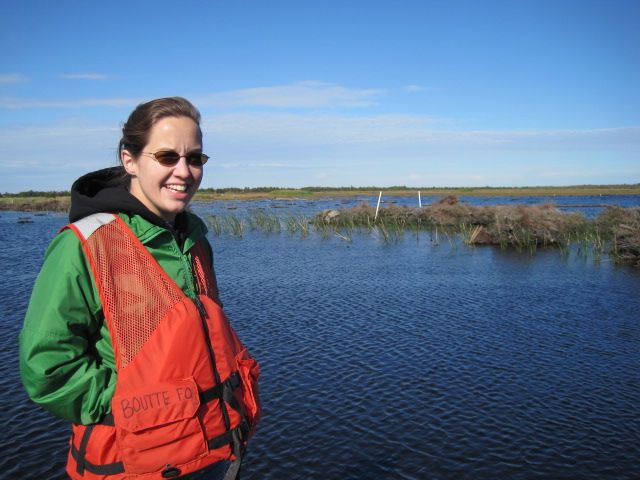
Today, I fell through the flotant marsh.

My week of flora fieldwork continued today, with vegetation monitoring along Bayou Segnette in the Jean Lafitte Barataria Preserve (my favorite park I've found).


View Larger Map

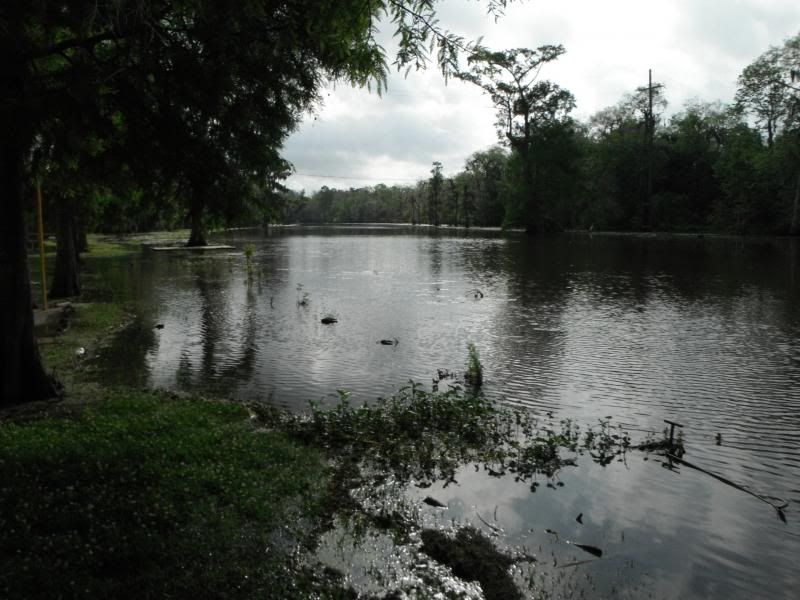
 photo DSCF0041_zpsf389846f.jpg

 photo DSCF0043_zps84f7dd81.jpg

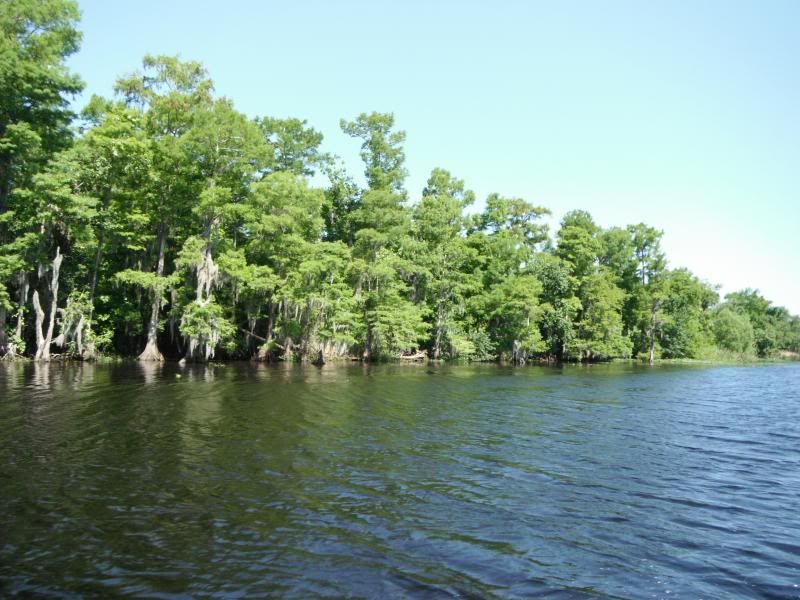
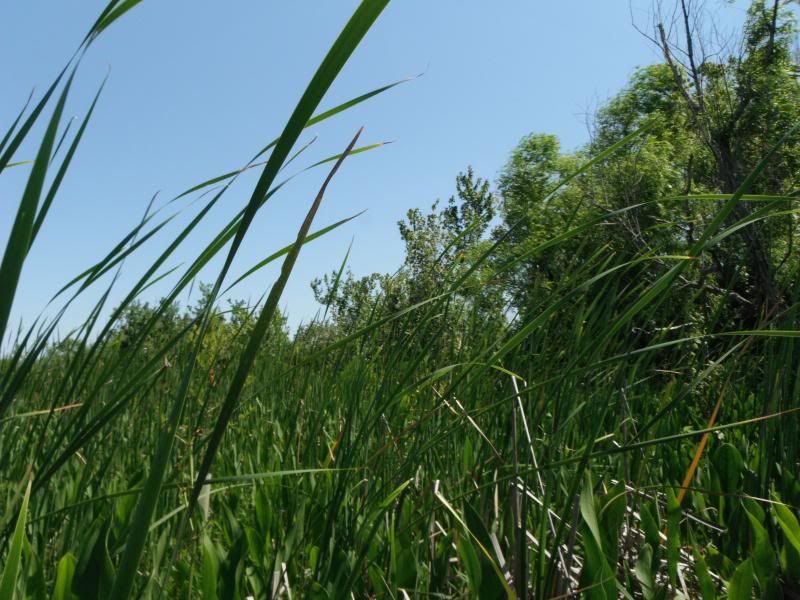
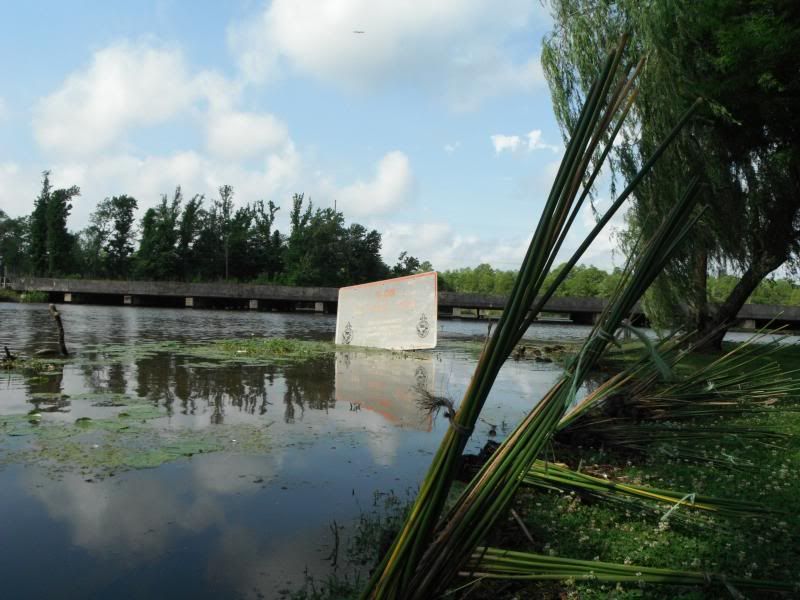
We were measuring bald cypress trees that were planted 1-3 years ago, and assessing their health. For the most part, they're looking good! This involved hiking through a spoil bank (basically the sides of the waterway that are built up with the stuff that gets dredged to keep the waterway clear), which was very dense with brambles and trees, and into the marsh, which had several inches of standing water.

I usually try to find out the landscape before I go out to do fieldwork, so I can make well-informed choices about my footwear. Anyone who knows me at all knows I'm not the kind of person who has a million pairs of shoes, but I do have several kinds of boots and outdoor/work footwear. With me in Louisiana, I have an old pair of awesome trail running shoes that serve as my water planting shoes; I have my yellow knee boots; I have my epic hiking boots; and a pair of cleaner, newer sneakers mostly reserved for doing active things that don't involve the wetlands.

Last time I planted in the Barataria Preserve, the ground was fairly high and dry, but after some thought about the recent rains and high water, I decided on knee boots. I was thankful that I did. Once past the spoil bank, there was several inches of standing water in the marsh.
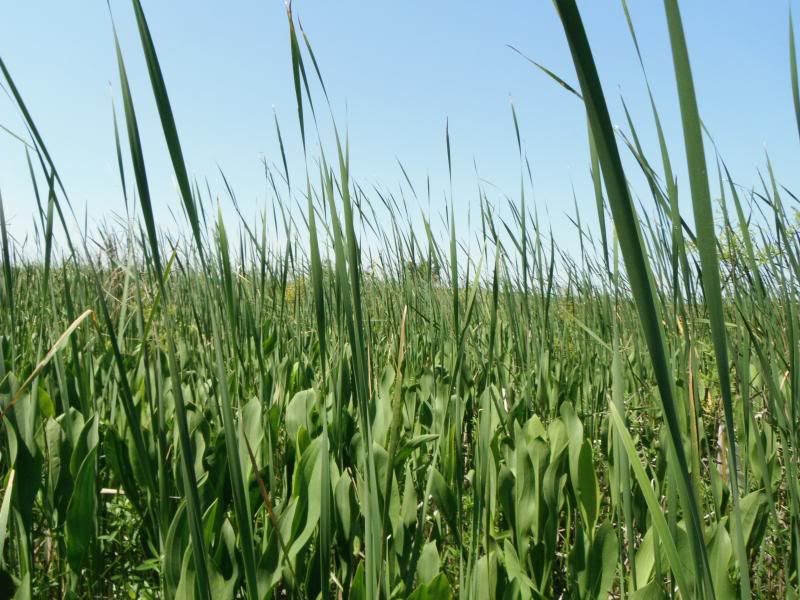
 photo DSCF0042_zps6018b2da.jpg

Just before lunch, I discovered the hard way that it was a floating marsh, which is called flotant here. How did I discover this, you might ask?

I fell through it.

One misstep, and down I went. I was stuck in the mud up to my chest, with water up to my shoulders. I had an instantaneous moment in which I thought that I should be claustrophobic or scared or something, but it passed immediately and I focused on getting my legs out WITH my boots. I was certain I had lost one, but I managed to get myself and my wellies out. I had noticed all morning that the ground was shaking beneath our feet whenever a big, loud boat went by. I mean, they do call it trembling prairie.
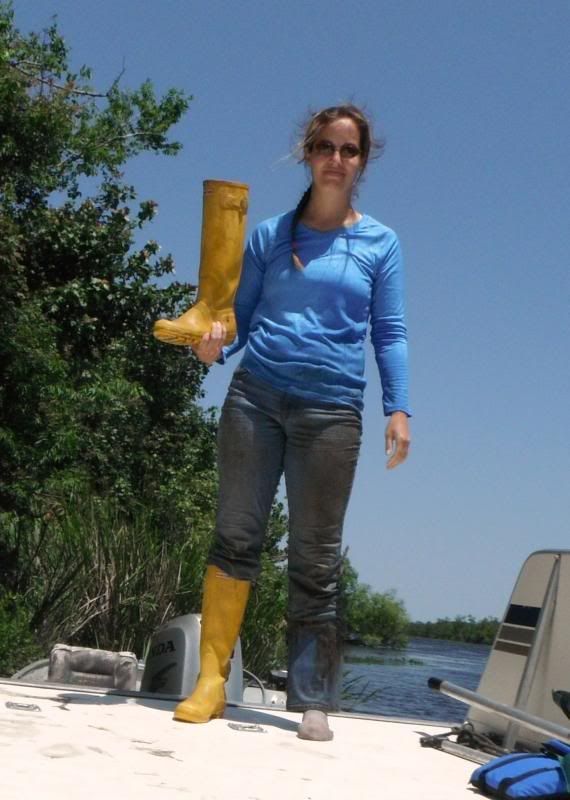
 photo DSCF0048_zps7ec0bb55.jpg

I have entertained the idea of acquiring hip waders for some time, but most of the field work I do here is shallow enough for knee boots or in water so high that hip waders can't help me. I guess today it didn't really matter what footwear I chose anyway.

13 May 2014

Today, I swam through an oil slick.

I'm having a fantastic week. Today was day 2/5 of planting projects. Plants! All week! Doing conservation!

 photo DSCF0010_zps08ee9723.jpg

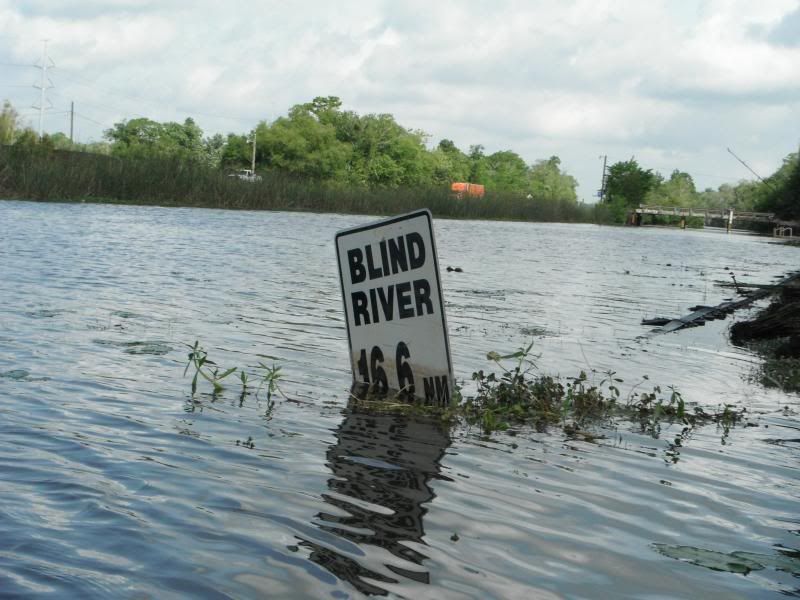
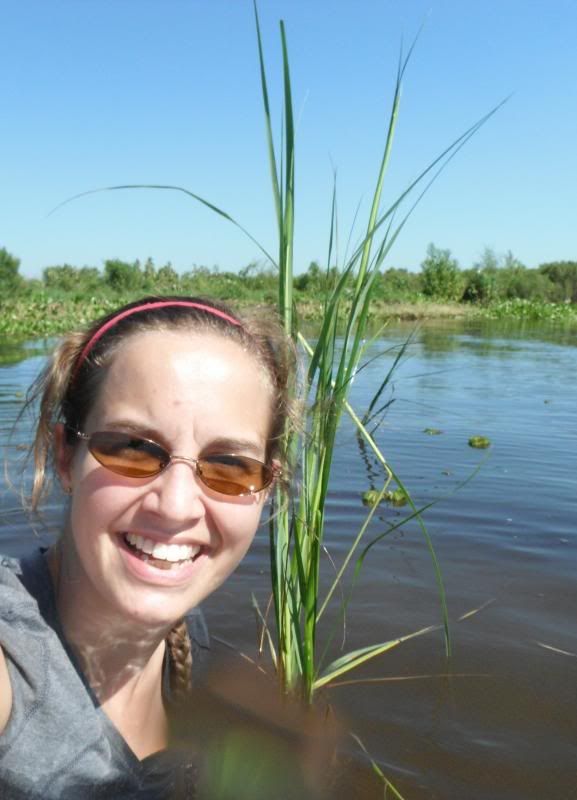
Today's project was putting about 800 gallon buckets of bullrush along the edge of Blind River in St. James Parish. This was to protect a bulkhead from further erosion. I love planting in water! The river was really high because of recent heavy rains and a strong south wind earlier this week, so the banks were flooded. The ground was a mixed bag-- really mucky and easy in some places, really hard and requiring a dibble or sharpshooter in others.

 photo DSCF0008_zps5c7e0f8f.jpg

As we were really struggling to get the rushes to stay. in. the. ground. along this particular area, I imagine we looked pretty funny from shore. We would just stand still in one spot for a while, basically treating the root ball like a pogo stick trying to get it to stay in the thin layer of mucky soil in water that was chin deep. So I'd look around a little bit because I couldn't see what I was doing anyway.

 photo DSCF0011_zps547542df.jpg

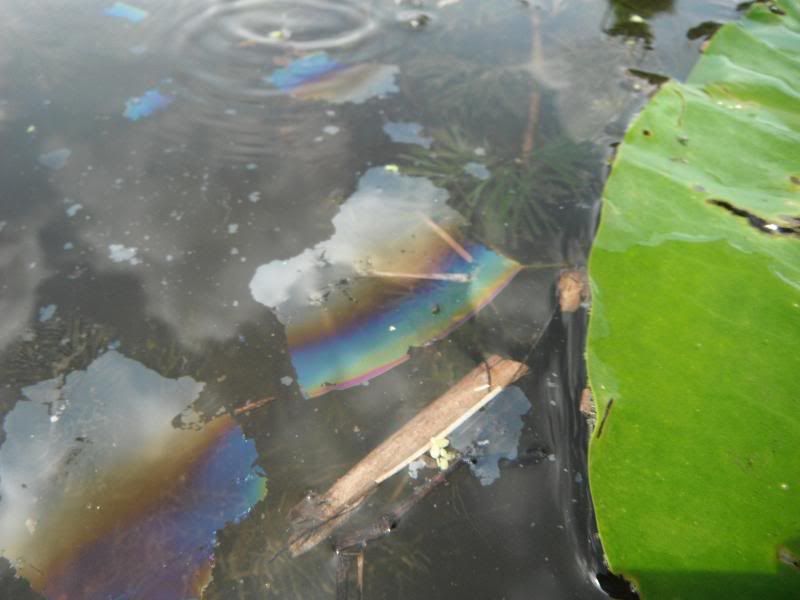
I was startled at one point in this stretch to notice something almost reddish to my right. At first, I thought I was bleeding. I checked my arms to see if I had nicked myself or something, but nothing. It kind of dissipated. I finally got the rush in the ground, and stepped sideways to plant another one, when I noticed I was in a pool of oil, all rainbow and shiny.

 photo DSCF0014_zpscd357867.jpg

As soon as I moved, it began to break up slowly and spread out. It was really bizarre, because I imagine oil and water to look kind of blobby like when you pour vegetable oil into water. I suppose without the limitations of the bowl or measuring cup, the oil spreads out very thinly. The edges looked so strange.

I didn't think much of it at the time, because we still had a bit of work to do and I really enjoy that work. On my drive back to New Orleans, I began to contemplate good and bad things that happened to me during the week, because it's Tuesday-- we have house meetings on Tuesday nights that generally begin with our highs and lows. High: I have five days of planting projects IN A ROW! Low:... wait a second, swimming through oil was messed up. Really messed up.

Full disclosure: I didn't actually say "messed up" in my head.

The more I thought about it, the more angry and sad I got. This is almost definitely not oil from that epic oil spill several years ago that is still producing tar balls and mats down along the Gulf. It's far more likely that this was just a leak from someone's boat, or an example of one of my biggest fears in South Louisiana: some slow leak of an oil pipeline that no one is watching.

Was swimming through oil good for me? Probably not. One of the few things I'm cynical about in this world though is health risks. We risk our lives every day by exposing ourselves to highly processed foods, cell phones, plastics, and sunlight. This alone will not give me cancer.

Just nightmares.

I'm sad that this is the reality of this environment, and so many others. I'm sad that I have to put myself in situations like this, that are questionable to my health, to do some good work. I'm really, really sad and angry and frustrated and helpless about how much we rely on oil and gas in the world. I mean, I'm really guilty (two roadtrips across Canada, a roadtrip around the eastern US, a roadtrip to get to Louisiana, even just driving to the site today was an hour to Thibodaux and another 45 minutes to get to the park where we planted; I've flown once a month every month since December till this month, and will be getting on a plane again next month).

Witnessing human impacts on this planet is exhausting me. It is really hard to convince myself to get up and work when it feels like I'm fighting a losing battle. What's easy here, is to get completely overwhelmed. Things are bad here. Really bad. And not just here.

All I can do is focus on the little things. Like each blade of bullrush now planted along the banks of Blind River. And all of the bitter panicum, phragmites and cordgrass we're putting into the ground on the north shore of Lake Pontchartrain tomorrow, and all of the sand live oaks going in the ground later this week. And all of the people who have listened to me talk about the wetlands here in Louisiana, and here on this blog. Thanks for reading this. Change won't happen all at once, but I can still add a little bit at a time, and so can you.

01 May 2014

workplace hazards

I've talked a little bit about my grass plantings with NRCS and the local Soil and Water Conservation District. I love them. This is one of my favorite things I get to do. The ground is very soft so it's incredibly easy to plant grasses and rushes, basically just punching them into the mud with my bare hands. And it involves being in the water all day. I love being in the water.

Plus, it's really, really effective over a short period of time, which is very encouraging in the face of some very challenging, discouraging work dealing with Louisiana's coastal issues.

People ask, probably jokingly, if I ever see alligators when I'm out in the water planting. Yep. I do. They are pretty harmless though. One of my first grass plantings in the fall, a gator just kind of floated along the shore with us, never coming closer than about 40 feet. Everyone down here tells me they're actually pretty calm animals unless people go out of their way to agitate them, like on TV. Swamp People kind of has the same reputation here as Jersey Shore does at home (we don't like it).

Last week's planting also featured a little gator, just pacing back and forth across the canal at the end of the day while we waited for the boat to come back and pick us up.

But this week's planting was more hazardous than either of those. We planted bull rush in the Intracoastal Canal, launching from Larose, planting along the canal on the other side of the slim barrier to Lake Salvador. This map shows directions from Larose to Jean Lafitte, which is super indirect, but if you draw a straight line between those two towns, it gives you an idea of where we were--


View Larger Map

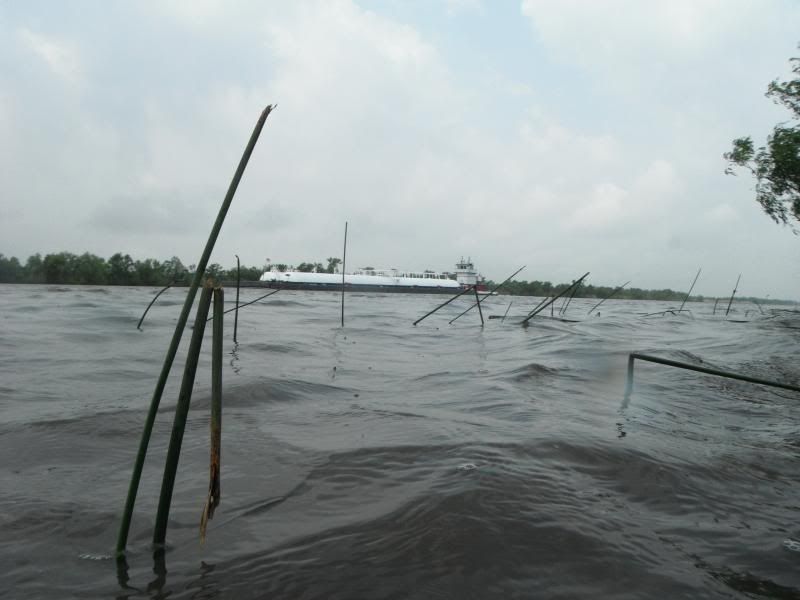
The big hazard du jour was not alligators or bull sharks (which is apparently also a possibility no one told me about until this week), it was barges and freight ships passing by, creating a very strong current. We were planting on a narrow, shallow shelf, right along the area that is dredged for these enormous ships. The planting will help protect the canal as well as the lake, helping reduce and prevent erosion that could lead to those bodies of water connecting and becoming quite difficult to maintain as a shipping route. I'm a pretty strong swimmer, but wandering too close to the edge of the shelf could have spelled the end.

 photo DSCF9936_zps82e33c39.jpg
Instead of being an alligator on the horizon, this week it was just big cargo ships and barges.

Thankfully, a non-issue. We stayed safe all day and didn't lose anyone. It was definitely interesting planting alongside big barges though. It reminded me how small I am, and how small what I'm doing is. However, I still believe that the small stuff matters. Bullrush grows in very densely, protecting the shoreline and withstanding strong currents and even a little bit of salt water. I'll probably be able to go back in July and check the progress. Every little bit of conservation is exciting to me!

28 April 2014

Every day is Earth Day!

Because I treat pretty much every day like Earth Day, I decided to treat April 22 like a holiday. I didn't work from home, I didn't take my work to another place, I didn't work in the evening... I just took a whole day to enjoy the beautiful world around me.


View Larger Map

I drove east on Highway 90 until I found a beach. That took me through some wetlands, pine forests, and small towns. I also saw one of the best signs of all time, that I regret not stopping to take a picture of: "Scenic Bypass to Space". It's referring to the NASA Stennis Space Center, but I still thought it was funny.

nasa logo
I drove into Mississippi and discovered Pass Christian, a small beach town. There was hardly anyone on the beach, so I parked, and I planted myself by the warm, shallow, quiet water of the Gulf of Mexico. I explored a little further in the afternoon to check out Gulfport and Biloxi, but Pass Christian wins. I'll go back.

The next, I got back to celebrating Earth Day Every Day with a grass planting with NRCS. We planted cord grass in several badly eroded areas in St. Louis Canal in the Pointe-au-Chenes Wildlife Management Area. This was the thickest, sickest mud I've been in so far. Smells varied from methane (farts) to sulfur (rotten eggs), and the bottom was so soft that I spent most of the day wading around waist deep in swirling, dark, murky boue pourrie.

It was awesome.

This project is especially exciting because there's a good chance that I'll have the opportunity to go back and check on its progress in July, before I'm done here.

The funny part about spending the entire day in the water and being totally soaked in mud, is that I had a presentation to give back in New Orleans East, and had no time to stop and change, much less shower. The good news was that it was a fairly informal talk about the wetlands, so the group was pretty amused that I was wearing the very environment that I was teaching them about. Thank goodness the talk was outside, so no one had to smell me too much.

I just love the world around me, and I'm glad I get to enjoy it in so many different places and ways.

(These were the first 350ish or so miles of 900+ that I would drive in the past week, but more on my Lafayette adventures next time!)

19 November 2013

success!

I don't write nearly often enough about my adventures as a NRCS Earth Team Volunteer. It's been a phenomenal experience, and I love love love it. It's pretty awesome that my position as a YAV allows me to keep volunteering with them, as part of my work but also in my free time when I can find it.

Today's adventure was especially poignant. The landscape we were investigating had such a great story to tell.
 photo DSCF8850_zps1f132e51.jpg

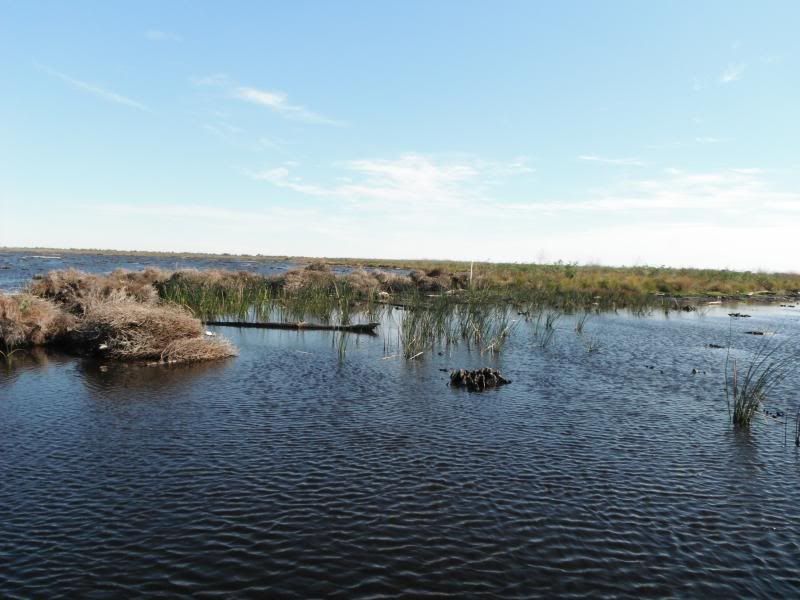
We (two NRCS employees, a Fish and Wildlife employee, and me) took an airboat out into Bayou Sauvage to monitor some vegetation, aka check on a few grass plantings that happened about three months ago. These are not plantings I did, but it's exciting to know that this is what some of my plantings might accomplish. But first, we look backwards--

 photo DSCF8850a_zpsf33e9870.jpg
Bayou Sauvage used to be a lot of cypress swamp. That cypress swamp in particular was heavily harvested to build New Orleans... two or more centuries ago. The stumps are still all over the place. Many have sunken, but the ground was a lot more solid at this particular stop, and there were stumps and knees sticking up everywhere. Even in an airboat, it was tough to get through here.

 photo DSCF8850b_zpsd35f229c.jpg
After many years of logging and then lots of other human activities (development of levees and canals that change hydrologic patterns, among other shady business... humans are the worst), this area became open water. Tons of erosion happened, and expanded out from there to create a lot of other islands and open water areas where there once was good healthy swampland.

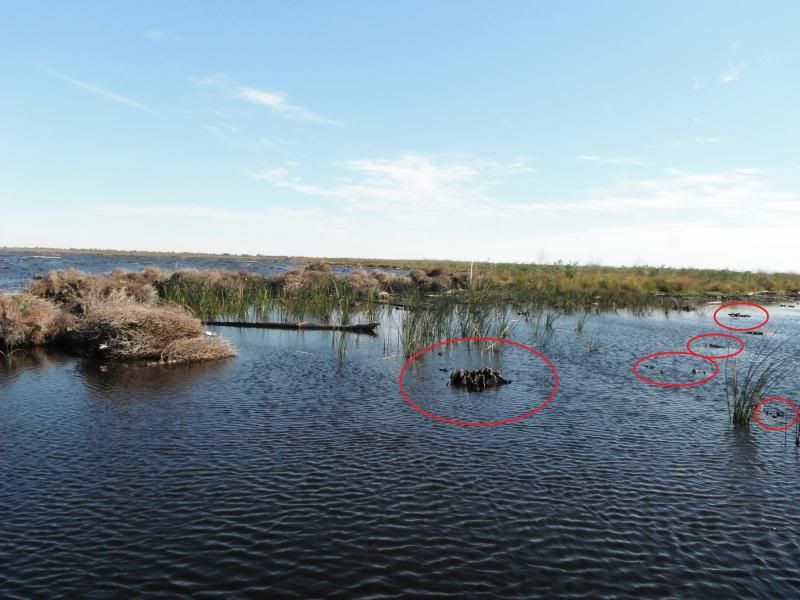
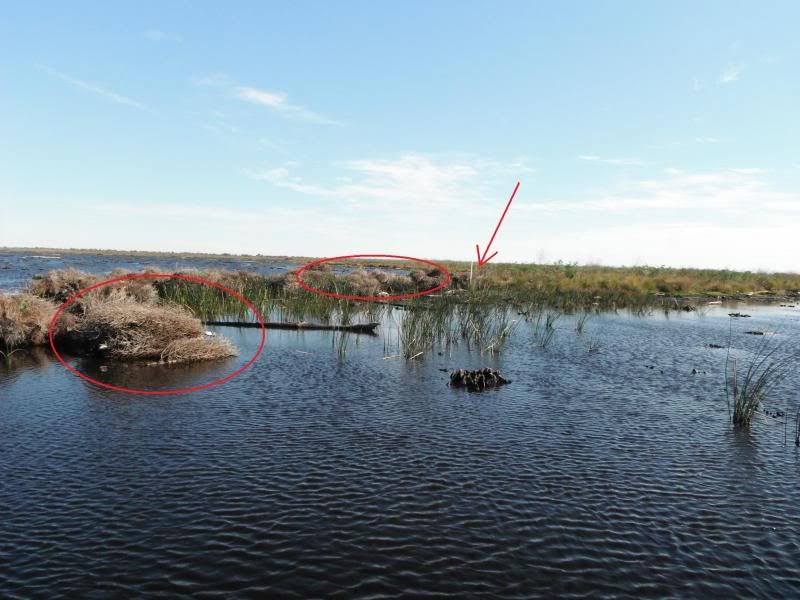
Something humans have done to try to fix this problem is use recycled Christmas trees to help catch sediments, reduce erosion and rebuild marshes. It took some trial and error-- there were a few busted up old cribs nearby from a less successful iteration of the project, but now trees are bundled together and airlifted by helicopter. And it's working! The circles show piles of dead Christmas trees that were laid down in the water here. The arrow points to an area that you can't even see the old trees, because the grasses have taken over successfully after enough sediment built up to sustain the ecosystem.

 photo DSCF8850c_zps3fb58c96.jpg
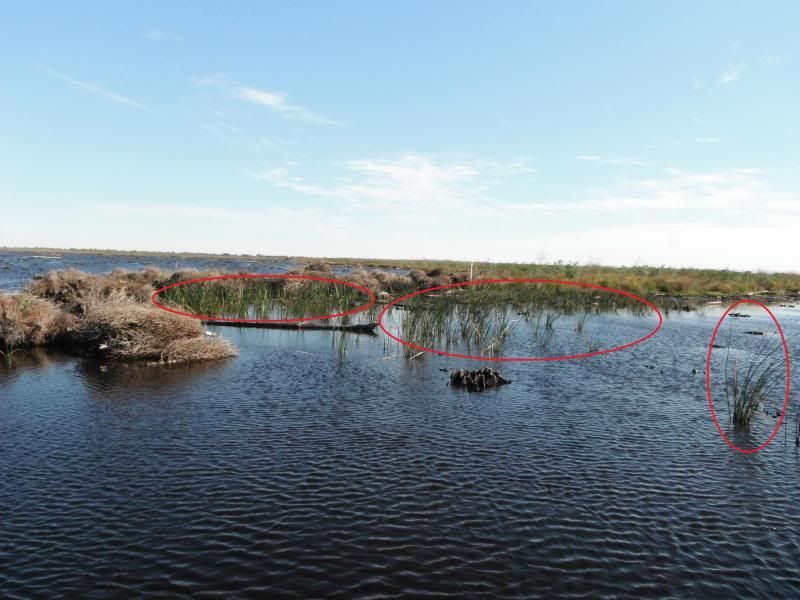
And finally, back to the present. These grasses were planted about three months ago. Grasses are one of the first steps to protecting an area from erosion and building it back up, first into health marshes, which can later progress into healthy swamps*. Here, people planted bullrushes in particular, but I've been planting cord grass and there's this other horrific sounding thing called cut grass that sometimes gets used (called such because it has sharp edges and will cut you). They've taken like little champs, anchoring soil, helping catch more soil and expand the area, creating more habitat for migratory birds and a healthier ecosystem now and to come. It's so exciting to see the progress in such a short time, and to know that I have done this to places. There are places in southern Louisiana that will probably hopefully be just as successful in the coming months and years. That is really, really exciting to know.

 photo IMG_1794_zps1a3297bd.jpg
Watch out world. I'm coming to conservation you. Just as soon as my hands get warm. It was surprisingly chilly for south Louisiana. Everyone was complaining but I was having a blast wearing a hoodie AND a windbreaker!


*Fun fact! The difference between marshes and swamps: marsh implies grassy wetlands, swamp implies forested wetlands.


27 September 2013

Spartina alterniflora

BEST DAY EVER AHHHH IT WAS AWESOME!

 photo DSCF8434_zps2cb2f7ef.jpg

I was really excited and barely slept on Wednesday night, last noticing the clock around midnight... ugh. But, at 4:45 sharp, I was leaving New Orleans, heading to a USDA Service Center in Thibodaux, just over an hour southwest of the city. I found it (remember that time I was stuck in traffic in Raceland? That's how to get there from NO!), and joined two employees of the local soil and water conservation district (not exactly my beloved NRCS, but the local government cooperators) to plant cord grass (not exactly trees, but ok, stay with me here, it was awesome) in Little Lake (not exactly a little lake, more like a half hour boat ride after an hour drive south from Thibodaux, but still, this was awesome) with a team of European hipster volunteers (who were not at all dressed or prepared for the work we were doing) and an alligator (who never came closer than about 20 feet but hung out for the entire afternoon).

None of that sounds especially great, but I assure you, I had a fantastic day.

 photo DSCF8422_zps1f822ea7.jpg

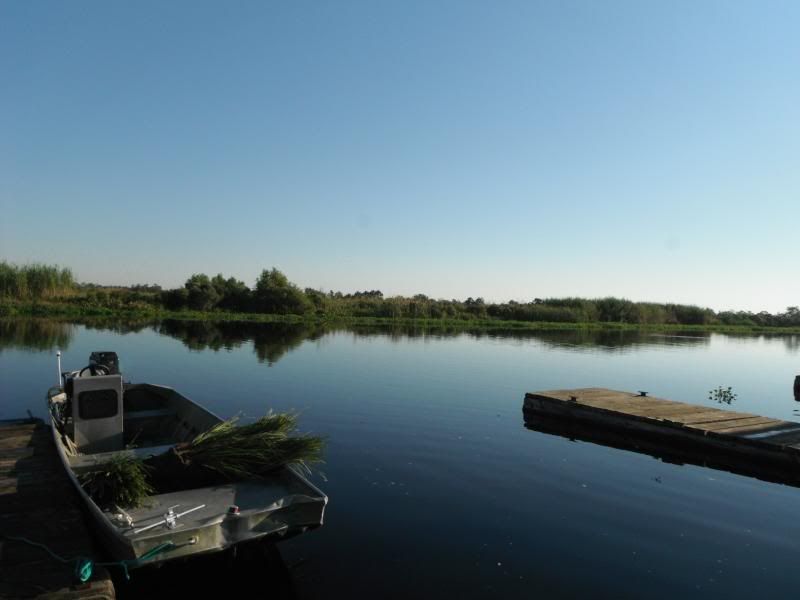
We were met by a producer who provided us with about 40 sacks of about 50-60 plugs of smooth cord grass each. We launched from a canal at the back of a sugarcane farm in Cut Off. It took a few trips to deliver all of the grass and people to the shoreline where we were planting (if you zoom out, it's down the canal east, then just north about halfway up that curved shore).


View Larger Map 

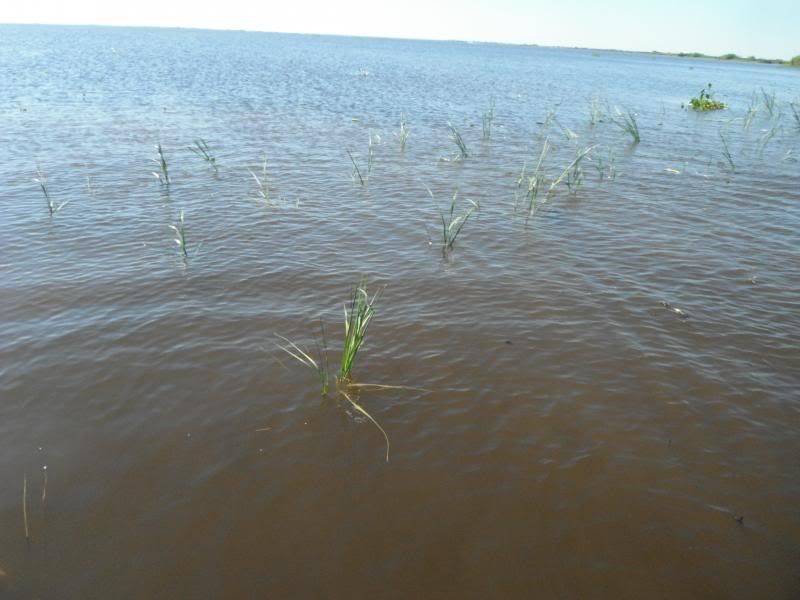
Planting in open water is kind of cool. For the most part, the ground is just soft and mucky, so we just kind of grabbed the little root ball of the grass and punched it into the ground. Even the harder ground, or the areas where more shells had accumulated, it was still pretty easy with the help of a thing called a dibble bar:

http://ecx.images-amazon.com/images/I/31cIo%2BqPLQL.jpg


We started the morning spread out, dividing and conquering a swath of shore line. I had a really nice time just swimming around planting grass on my own. Shortly before lunch, the girl from Denmark noticed a six foot long alligator spying on her work. We ate lunch together on the boat near that spot, hoping to scare the gator away. It worked, but we decided to work closer together to finish the work. This was a good decision, because the alligator came back. It just sat and watched at a distance for a while, slowly closing that distance and making us all a little nervous. There was much discussion about how quickly alligators can move and what their hunting habits are like. It seemed like it was just hanging out, waiting for us to freak out and abandon our weakest herd member.

But we didn't, and nothing terrible happened, just a beautiful day in a warm lake with a cool breeze, planting cord grass. I love doing conservation. It's been really wonderful talking with people, hearing stories, and dreaming up how we can make a difference, but it's another thing altogether to go out and actually do something. I'm pretty excited that I've been able to do so much in just my first month here. It's hard to believe that I arrived exactly a month ago today!

I planted those! photo DSCF8436_zps70b853ac.jpg

28 April 2013

Volunteers of America

I've been volunteering with NRCS for a little more than a year now. It's been basically awesome. I've been getting tons of experience, they've been getting free help, I've been getting free training. I want to work for them. What I'm doing in New Orleans will help prepare me for that as I continue volunteering (more on NOLA soon, promise). This past week was National Volunteer Week, and I received sweet letters and cards and swag and gifts from some of the offices I've been spending time with. They also had me write an article to appear on the state's volunteer info site, and eventually also on the national volunteer showcase. They edited me down, but here's what I had to say (no matter how many times I rewrote it, I never felt like my enthusiasm was properly conveyed. Please, ask me about how much I love NRCS sometime)--


I joined the Earth Team about a year ago to gain more experience in conservation fieldwork while looking for full-time work after grad school. With a background in Geography, I only knew that I wanted to help the environment for a living, but wasn’t really sure how to do that. I was immediately met with a lot of great ideas and opportunities. What started as helping one office with occasional conservation planning and clerical work became an awesome adventure in over 200 hours of greatly varied fieldwork through four different offices (so far!). It’s been really exciting to see so many different places and practices.

I started in New Jersey’s Freehold Service Center. I went with the staff for many conservation planning meetings, helping with surveys, mapping and GIS, and spot checks. I occasionally visited the Columbus Service Center to gain experience with engineering surveys. New Jersey has so much diversity in such a small area, so I was already exposed to a wide variety of projects focused on drainage, irrigation, cover crops, wetlands rehabilitation and wildlife habitats. It’s been very interesting to see the different environments and how conservation practices are adjusted to accommodate them.

In the fall, I was working in northern New Jersey a few days a week, so I decided to call the Hackettstown Service Center to continue my volunteering. I was taking a soil science course at the time, so I got involved with soil investigations all over northern New Jersey, including rural and urban environments. This has really helped me create a broader foundation (literally!) for understanding conservation issues. I’ve been able to help with soil evaluations as well as some outreach, helping lead a fieldtrip for college students and proctor the upcoming Envirothon.

After exploring conservation all over New Jersey, I found myself in Arizona for a few months, so what did I do? Found my nearest NRCS office! Through the Kingman Field Office, I was able to see a completely different side of conservation in the desert of northwestern Arizona. It was certainly eye-opening to see how farming, ranching and conservation take place in such an arid environment, especially compared to the practices I’ve become familiar with in New Jersey. I assisted with Natural Resource Inventory and learned about the desert’s biodiversity. I also helped with surveying on reservation land to prevent erosion of the dry, sandy ground under the rare but heavy rainfall. I mostly assisted with rangeland management projects, spot checking invasive species control and fencing projects.

Since I’ve been back in New Jersey, I’ve been back to helping with more familiar work in soil investigations and conservation planning, as well as some office work. The field is definitely more exciting for me, but I don’t mind assisting with filing and mailings—it’s good to know the background work involved in conservation, and I’m also happy to help out the agency that has given me the opportunity to see so many different ways that conservation is being done. I’m moving to New Orleans in the fall to work for a year, and I’m definitely looking forward to getting in touch with NRCS in Southern Louisiana!

15 January 2013

Your tax dollars at work!

Today was my first experience driving a government vehicle! I felt especially inspired and capable after catching this episode of Duck Dynasty last night...

You know, I really enjoy that show.

Where did I go in the Chevy Silverado? Wikieup, Arizona:


View Larger Map

a small stop on the way to somewhere else. Presumably Phoenix. It took me an hour to get there from Kingman, and I saw maybe two vehicles and zero other things besides tumbleweed and open range on the way.

I met with a local (and my goodness is that a relative term in a place like Wikieup-- I'll come back to that) rancher who is building a cattle fence for NRCS, his wife, and a District Conservationist who needed more fence check experience. This was my first fence, too. We met at the trading post (seriously! the trading post! which is nearly the only thing there!) and jumped into one truck and spent two and a half hours driving on dirt roads around an enormous ranch, occasionally stopping to take GPS points and pictures to verify that the fence was put in as contracted. It was a beautiful, straight fence. They put the barbed wire at certain heights in different regions, depending on whether antelope are present or not (to make it easier for antelope but more difficult for cattle to sneak out). blah blah blah I like this stuff but you probably don't care whatever dream job!

So to give you an idea of "local"-- this man's got ranches all over the state, but lives somewhere outside of Wikieup. His daughter attends school in Wikieup, which is about 40 minutes drive from home. There are 27 students and 3 teachers in that school-- grades are combined K-2, 3-5 and 6-8. When she goes to high school, she'll have to take the bus an hour to Kingman. The fence we were checking today? 5.5 miles, and it was all within the ranch's borders-- NRCS doesn't built border fences, just partition fences to help with grazing management.

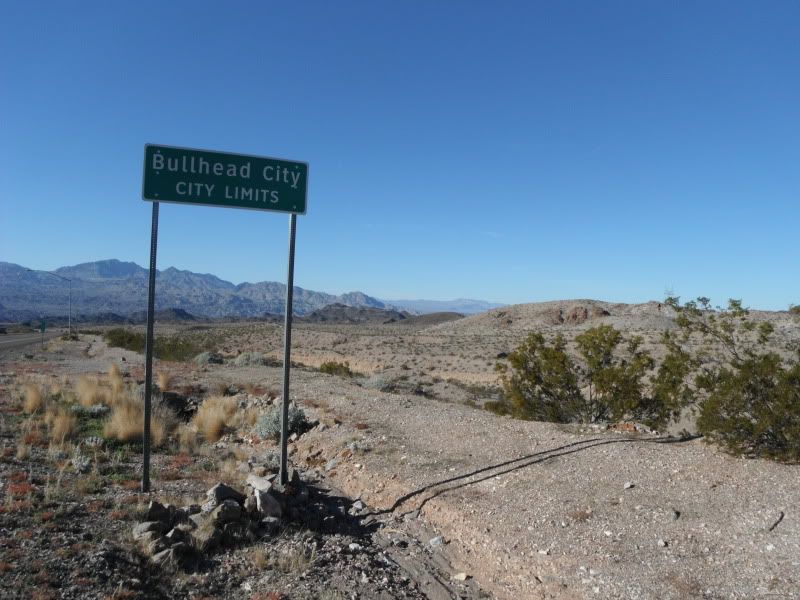
Drove back to Bullhead City and stopped to take this photo, because I think it says a lot about where I am.

 
Quiet evening. Our friend Eric is here visiting. He's in Las Vegas for work this week. This weekend's trip (Petrified Forest and Painted Desert!) is being augmented by Meteor Crater, as per the brilliant suggestion of one of Mike's coworkers! Yessss!

14 January 2013

the pinyons up north

Today: field work at 5800+ feet at 19°.

I really, really, really love volunteering with NRCS (I think I'd love working for them more, but I'll take what I can get for now). Today's field work took us up to the Hualapai Reservation to Peach Springs, Arizona, which I visited in August. After a soil and water conservation district meeting, we drove up into the open rangeland north of town to spot check some conservation procedures. Apparently juniper is invasive here, so the object of this practice was to cut down/remove all junipers under 16 inches dbh (diameter at breast height, a common forestry measurement). The dbh limitation was because there were apparently some complaints about removing old growth (aka big trees).

So our job was to drive around the plot in question and spot check if there were any small junipers left. Even though it was open rangeland as far as the eye could see, it was kind of challenging, because juniper and pinyon look roughly the same from a distance in the bright, bright sun. We ended up getting out a few times to measure out 1/10 acre and count the species of trees. It was really cold and windy! Overall though, success. There were just a few small junipers that needed to be taken care of still.

Driving to and from Hualapai from and to Kingman was pretty incredible. I just can't get over the enormous vistas here. Unfortunately, they make me kind of dizzy*, but it's pretty beautiful. I also saw my first instance of "blowing dust" today, from a ranch that NRCS is working with because it is like the Dustbowl there. Seriously, the fences get so clogged with tumbleweed and blowing dust that the cattle can just climb over it. So that's not good, but it was still really interesting to see.

No antelope, no burro, so that was disappointing, but I've only been here ten days, with more fieldwork and adventures ahead--
Tomorrow: field work in Wikieup, and driving a government vehicle for the first time!
This weekend: Petrified Forest, Painted Desert, Meteor Crater and Flagstaff

*So it turns out that carsickness is a type of vertigo, which is exacerbated at high elevations. Fun!

11 January 2013

first week rundown

This is my seventh day in Arizona. So far I have:
  • gotten my brain into this time zone
  • begun Arboriculture and Urban Forestry online (the irony of taking those in the desert)
  • signed up for two Coursera classes
  • learned how to operate a French press
    • cold brewed coffee (this was entirely too strong, but the right flavor, so I'll keep working on it)
  • gone for long walks every morning
  • completed two of three days of week 1 of the Couch to 5k program with Mike (on a scale from couch to 5k, I am probably somewhere in the middle, although the hills and altitude may have set me back a bit)
  • did a soil texture analysis (Carrizo-Riverwash complex: loamy sand! Let me know if you want to see my lab report.)
  • caught up on Wait Wait Don't Tell Me and Prairie Home Companion
  • applied to over 800 jobs (this is not an exaggeration, but this includes 702 openings around the country within the same announcement and four other announcements with over a dozen openings-- I guess it makes more sense to tell you I applied to 14 jobs this week)
  • spent a lot of time on facebook and Google Reader
  • Skyped with Mom and Dad
  • read half of the 12th book in the No. 1 Ladies' Detective Agency series (love love love these books)
  • spent yesterday morning with NRCS on Mojave Nation land checking out cropland deficiencies (mostly due to irrigation systems that were inundated with sand)
    • Yes, it turns out there is cropland in the desert. Alfalfa mostly, and some cotton. They have sheep grazing nearby here. They do floodgate irrigation by the Colorado River. It's kind of bizarre to see a swath of green in the desert. 
It's "chilly" here this morning. Yesterday's weather:

Weather9January.jpg  

Blowing dust?! This apparently brought some kind of "cold front". I'm excited to do field work with NRCS at much higher elevations next week, where the high is expected to be well below freezing. Arizona?!

30 August 2012

AZ hot as I thought...

So, I'm in Arizona. That makes 15 states and 4 provinces since June, 4 states and 3 provinces of which were new for me. And I thought I wouldn't get to travel much this year...

This is my first time to the southwest. I've had a layover in Las Vegas before, but that only counts so far as running through the slot machines at the terminals to make my next flight and seeing nothing but darkness surrounding all of the lights of Vegas as we landed and took off.

I landed around 10:30 PM local Friday/1:30 AM EDT Saturday after spending a sweet day in Philadelphia with a few friends. Mike kindly watched my flight status and was there waiting for me at baggage, even though I was half an hour early. We left the airport for our hour and a half drive back to where he's now living in Bullhead City, AZ, and I swear I felt like I was on the moon (a little bit tired, but really the landscape with nothing but headlights on it looks like the moon, hilly and rocky and sandy).

Mike had a blood-borne pathogens test to take at his school on Saturday morning, so I got to see his classroom and his school (there is NOTHING around it but desert and some far-off looking mountains) and met a few of his fellow faculty members. Other than that, I admittedly spent most of the weekend napping. I find it remarkable how much I love traveling, given the fact that I am terrible at time zone changes (not to mention excessive car sickness, which thankfully hasn't been an issue so far this trip). We did have dinner with a woman he teaches with and her husband, who live at the edge of a country club-- it's very weird seeing grass, but there are quite a few golf courses here in the desert (Mohave County at least borders the Colorado River, so they aren't pumping water too terribly far...)

While Mike goes to school, I've mostly sat around working on my Soil Science course online, or my syllabi for the three courses I'm teaching at William Paterson and Rutgers this fall. I have spent two days this week volunteering with the local NRCS office, which has allowed me to get out and adventure a little bit. I've mentioned once or twice on here that I've been volunteering with them since April, and I LOVE IT. Seriously. I just adore the things I've been able to see and learn about in the name of conservation all over New Jersey, and now in a small part of Arizona.

On Tuesday, I drove from Bullhead City through Union and Coyote Passes (~3500 and 3700 feet, respectively), through the Golden Valley and into Kingman to meet up with Erin, a rangeland specialist with NRCS. She took me to Peach Springs, in Hualapai Territory, via Old Route 66 for a meeting with some producers and conservationists about concerns and conservation practices in the area.


View Larger Map

It was a long day, but I got to see a lot of upper desert, into the mountains and across a plateau. I asked poor Erin about a million questions about Arizona vegetation, landforms and conservation, but she didn't seem to mind (she chose this as her career, after all). It has rained a little bit recently, so there are a lot of new grasses popping up all over the place, making the desert a lot greener than I expected.

Yesterday, I got to help Erin with a Natural Resource Inventory, which is basically taking note of every soil, rock and plant (and animals, which there weren't really any where we were) in a circle 150 feet in diameter. It took us about five hours, and we finished measuring and sampling just before noon. I was very grateful that there were some clouds and it was cooler at the higher elevation in the Kingman area, but it was a very cool experience getting to know the ecosystem pretty closely. Hopefully my Soil Science course will land me a job with these people in the future.

In the meantime, having a wonderful stay in Arizona!